At a glance
Which deck should you cross?
Choose the upper deck for a crossing between the Cathedral side of Porto and Jardim do Morro, with broad views over the riverfront. Choose the lower deck to connect Ribeira with the Gaia waterfront. You can combine both in a longer walk, but the change in height between them is a real part of the route, not a detail to ignore.
Choose the upper deck
Choose the lower deck
One bridge, two levels of the city
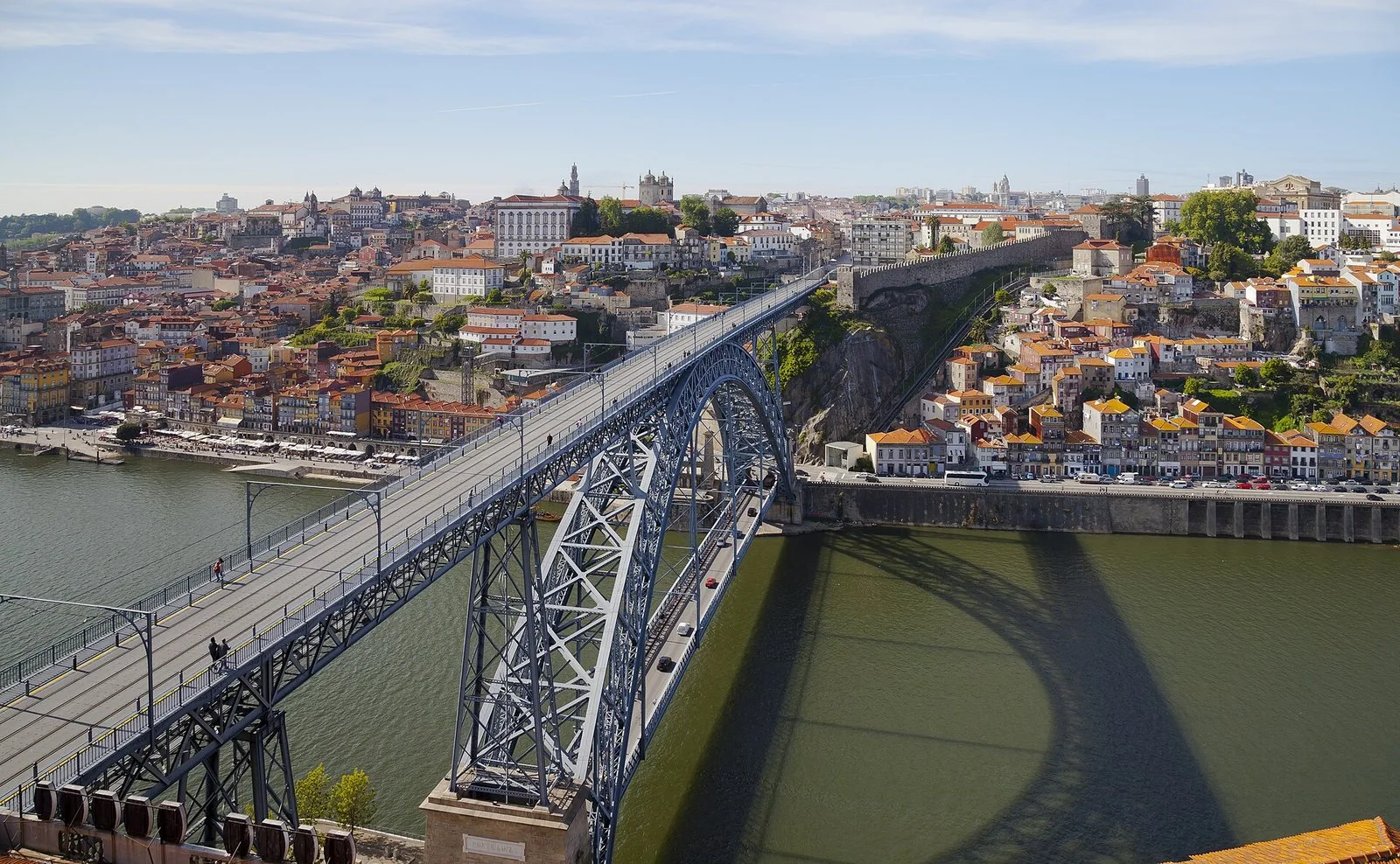
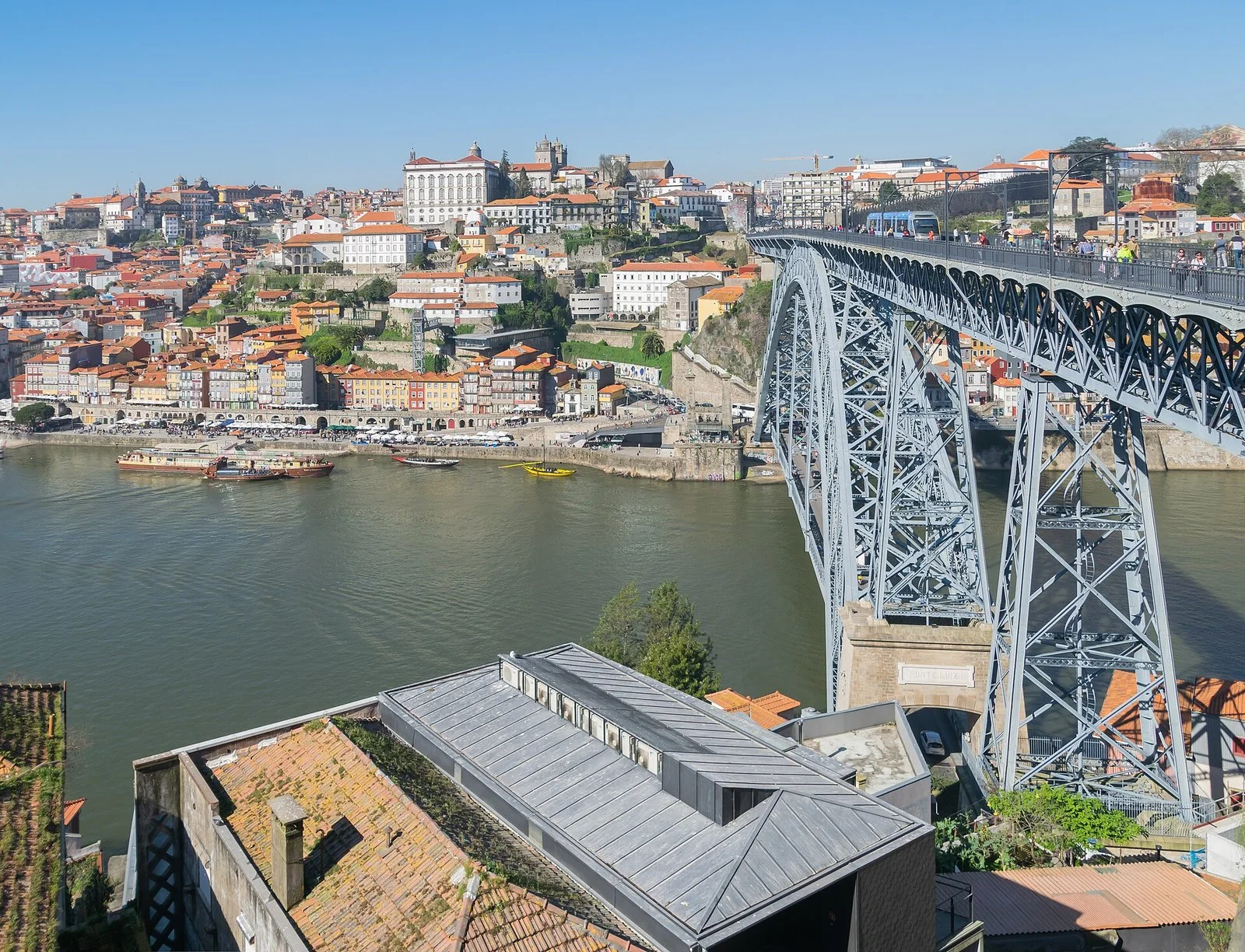
Look at the bridge from the riverbank before deciding how to cross it. Its great iron arch supports two decks at different heights. The lower crossing belongs to the world of quays, riverside streets and the water; the upper one connects the higher parts of the two banks. Both offer a memorable experience, but they solve different walking needs.
The bridge opened in 1886 and was designed by the engineer Théophile Seyrig. It is often associated with Gustave Eiffel through Seyrig’s professional background, but attributing the bridge itself to Eiffel misses the distinction. Its engineering is best appreciated from a little distance, where the arch and the two decks can be seen together.
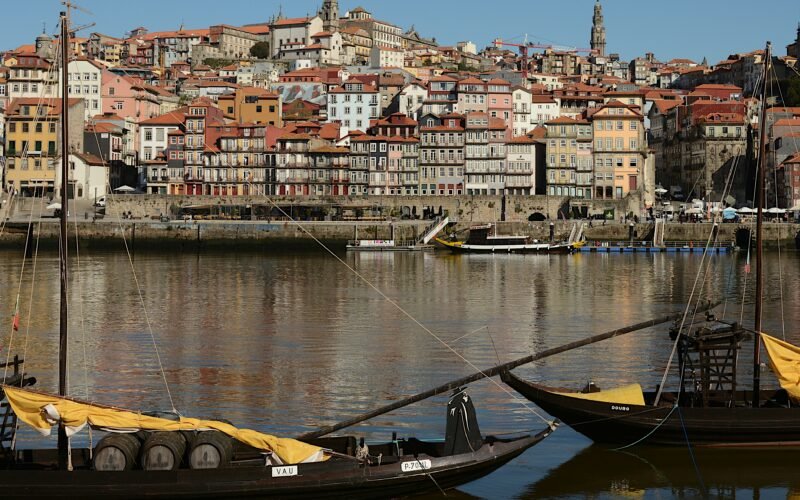
On the Porto side, the riverfront neighbourhood is Ribeira. Across the Douro is Vila Nova de Gaia, a separate city. Crossing therefore changes more than the view: it takes you from one bank and urban setting to another.
The upper deck: Cathedral-side approaches and views towards Gaia
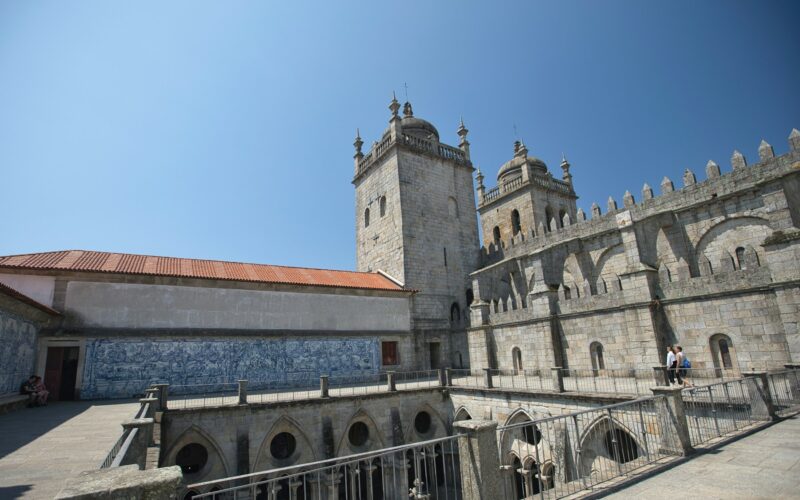
The upper deck is the natural choice if you are already exploring the higher historic streets of Porto. The official tourism description connects the Cathedral area with Jardim do Morro and Avenida da República in Gaia. If you are planning a visit to Porto Cathedral and its surroundings, consider the bridge as a continuation at that level rather than descending to Ribeira first.
This is also a working Metro crossing. Use the designated pedestrian space, pay attention to approaching vehicles and follow the signs on site. A photograph is never a reason to step towards the tracks or stop where people need to pass. Children and anyone who feels uncomfortable at height may prefer a shorter pause at an approach rather than lingering along the crossing.
On the Gaia side, Jardim do Morro provides another place to appreciate the setting. It can be more comfortable to take your time from the bank than to try to enjoy the entire panorama while crossing. The exposed position also makes weather and wind part of the experience.
Photo: Krzysztof Golik / Wikimedia Commons · Dom Luis I bridge from Jardim do Morro (1).jpg · CC BY-SA 4.0. Resized and converted to WebP; original framing retained.
The lower deck: Ribeira and the Gaia waterfront
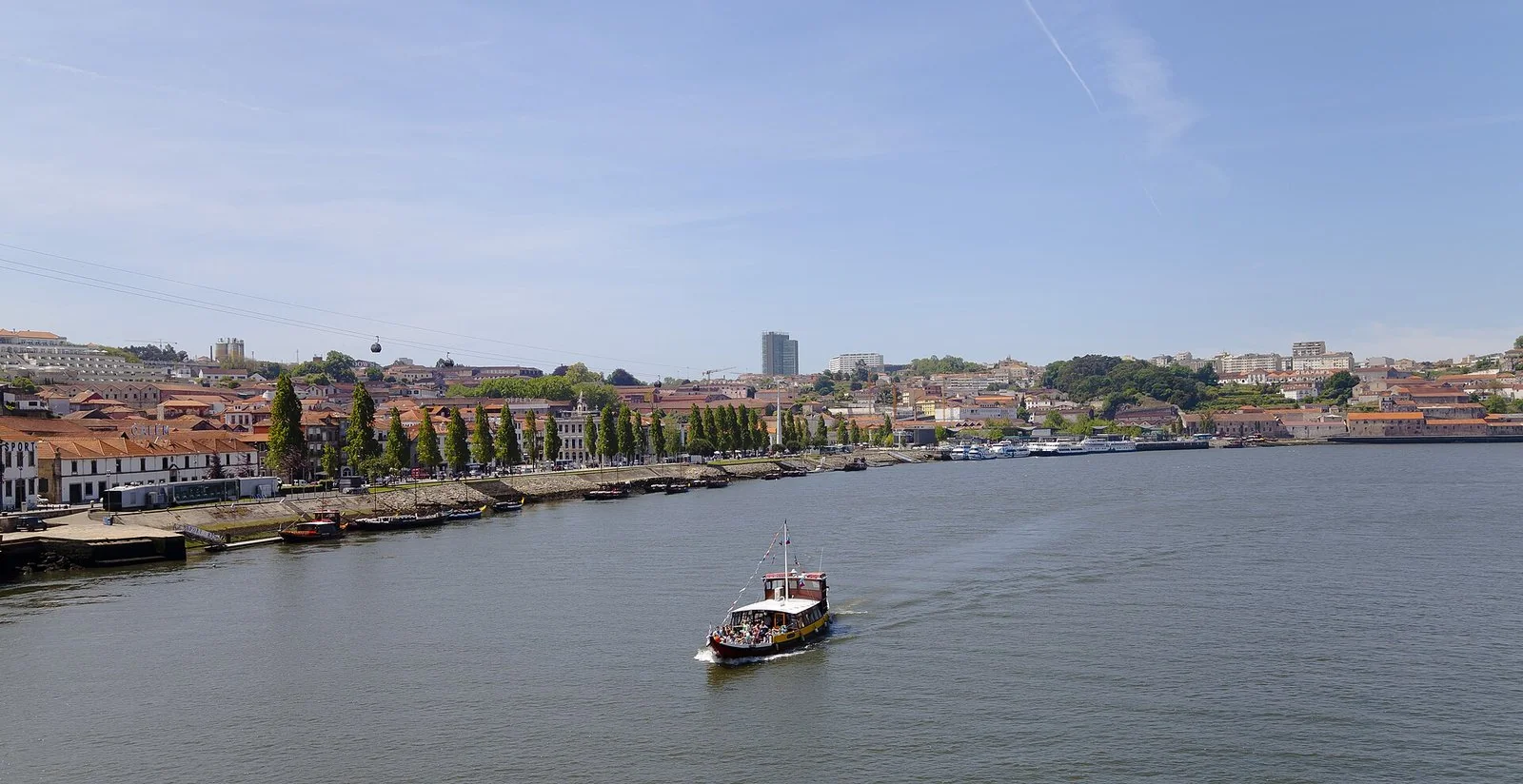
Choose the lower deck when your starting point is already beside the Douro. It connects a walk around Ribeira with the waterfront in Gaia without first going up to the higher crossing. From here the appeal is the relationship between the iron structure, the river and the buildings around it, rather than the elevated panorama.
Once across, move a little away from the bridge before choosing where to stop. From the Gaia bank you can look back towards Porto, while a view from Ribeira places Gaia behind the structure. These are different compositions; there is no need to collect the same photograph from every available position.
The lower deck does not remove the hills from the rest of the day. If your next destination is in the upper historic centre, you still need to plan the change in level. Nor should the word “lower” be treated as a guarantee of a step-free approach: surfaces, pedestrian arrangements and the route to the bridge all matter.
Photo: Diego Delso / Wikimedia Commons · Río Duero a su paso por Oporto, Portugal, 2012-05-09, DD 05.JPG · CC BY-SA 3.0. Resized and converted to WebP; original framing retained.
Choose a crossing that fits the rest of your walk
A simple way to plan is to decide where you want to finish. For a riverfront afternoon, use the lower deck and continue along the bank. For a walk between the Cathedral area and Jardim do Morro, start with the upper deck. This is usually more useful than crossing whichever deck happens to appear first and working out the return afterwards.
Combining the two can make a satisfying loop: cross at one level, change height on the bank and return at the other. That is an option for a group comfortable with Porto’s slopes and walking surfaces, not a necessary test of whether you have “done” the bridge. Avoid making it a fixed-duration promise; stops, crowds and the chosen approaches affect the outing.
If someone has limited mobility, uses a pushchair or prefers to avoid stairs, plan the complete route individually before setting out. Check current access information and any transport you intend to use rather than relying on the apparent simplicity of the crossing. For a wider plan, use our guide to Porto, Ribeira and Gaia in one day without trying to fit every stop into the same visit.
Leave room for the view, rather than chasing a timetable
Allow time for the approaches and the riverbanks as well as the bridge itself. A short crossing and a longer photographic walk are different visits. There is no single best hour for everyone: cloud, changing light, the direction of your route and the number of people around you all influence the experience.
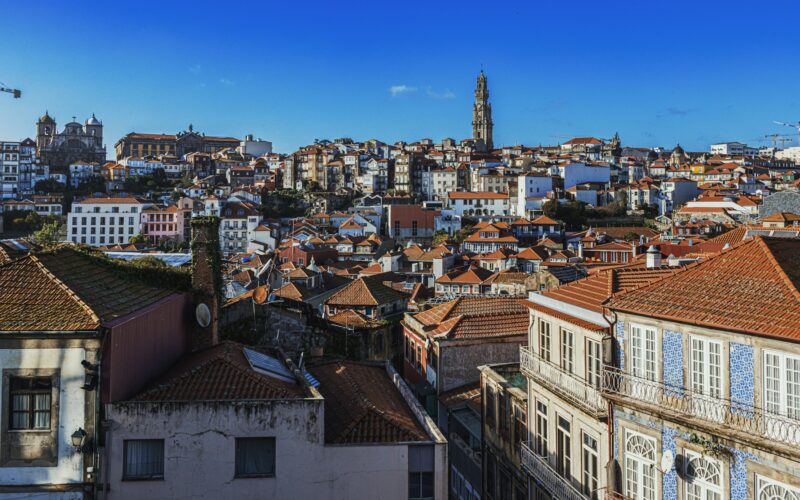
If the pedestrian space is busy, keep moving until you reach a suitable place to pause. For a complete view of the arch, look from the banks rather than expecting the best photograph to be taken on the bridge. If the attraction is height itself, the Clérigos Tower visit offers a separate city-view experience; it need not be added simply to fill the day.
Before setting out, consult current local notices and the official bridge information. Temporary arrangements and the operating status of transport or attractions should be checked for your visit. Wear footwear suitable for an urban walk and leave enough flexibility to shorten the route if weather or the group’s energy changes.
Our suggestion
Choose the direction before the crossing
Choose the level of the neighbourhood you are already exploring and walk towards a place you want to visit next. Leave the return flexible: a considered crossing can be more rewarding than a rushed loop made only to use both decks.
Planning a Walkborder tour
Planning your private Porto tour
Yes, within the available time, geography, ticket conditions and operational limits. Major changes should be agreed before confirmation.
Explore Porto
See the bridge within a private Porto experience
Explore Porto’s historic streets, Ribeira and views from Gaia on our Private Porto City Tour. Tell us what you would most like to see so that the plan can be discussed before you book.