At a glance
Why visit Ajuda Palace?
Choose Ajuda for furnished royal interiors and the contrast between private apartments and formal court spaces. It is particularly rewarding if decorative arts interest you more than a quick exterior photograph.
What to look for
How to plan
Luís I and Maria Pia
Begin with the palace as a royal home
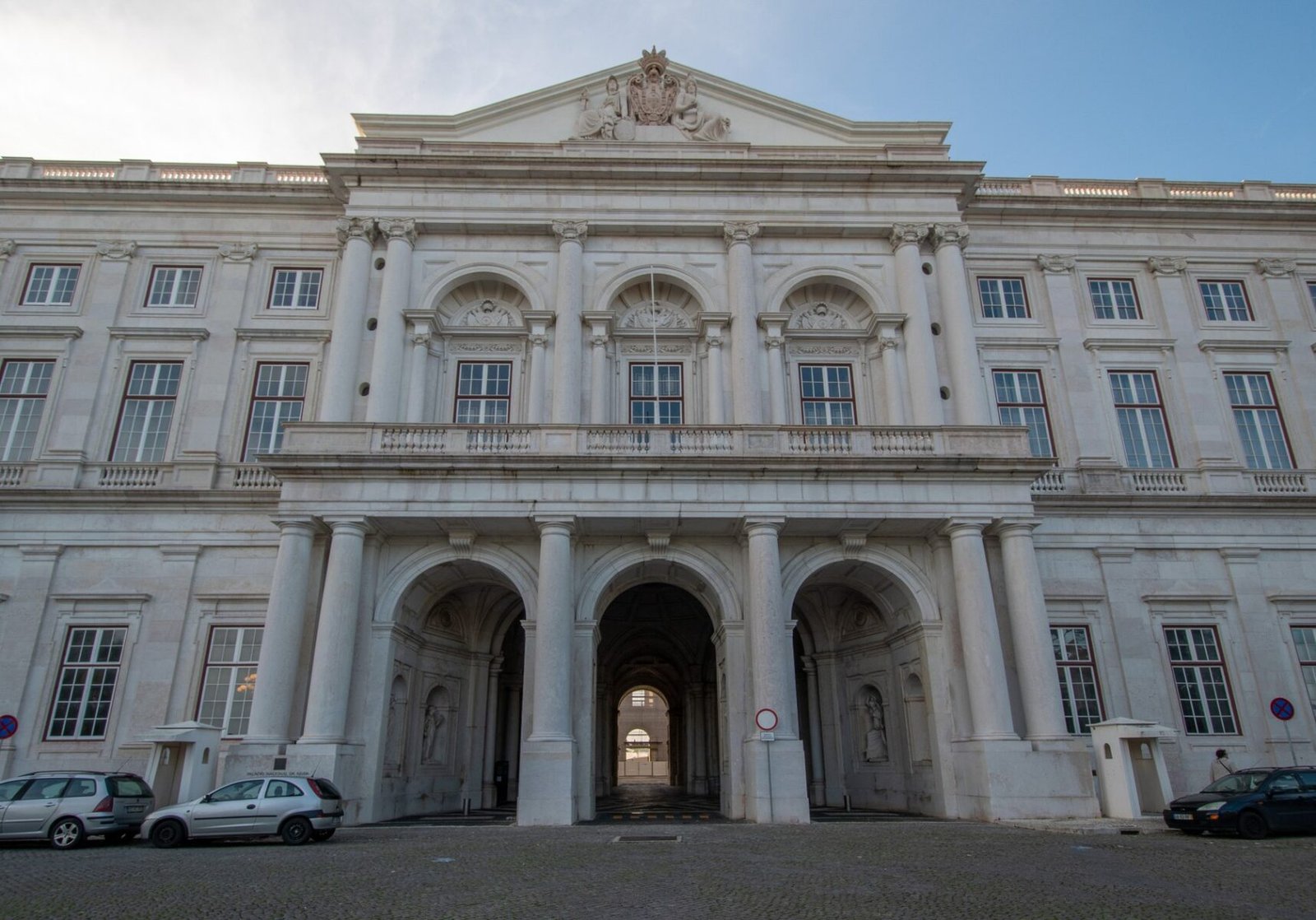
The neoclassical Ajuda Palace became the principal royal residence under Luís I. After his marriage to Maria Pia of Savoy in 1862, the queen helped shape its richly furnished interiors. The palace’s own history places these rooms within a nineteenth-century concern for comfort and privacy as well as royal ceremony.
Keep that combination in mind as you enter. Ask how a room might have been used, who would have entered it and how its furnishings supported that purpose. A comfortable seat, a carefully arranged table or the position of a doorway can make the setting easier to understand. You do not need specialist knowledge to notice differences in scale and atmosphere.
Photo: xiquinhosilva from Cacau / Wikimedia Commons · 20718-Lisboa (49090365816) · CC BY 2.0. Resized and recompressed; original framing retained.
Photo: Lisboa1143 / Wikimedia Commons · Sala do trono · CC BY-SA 4.0. Resized and recompressed; original framing retained.
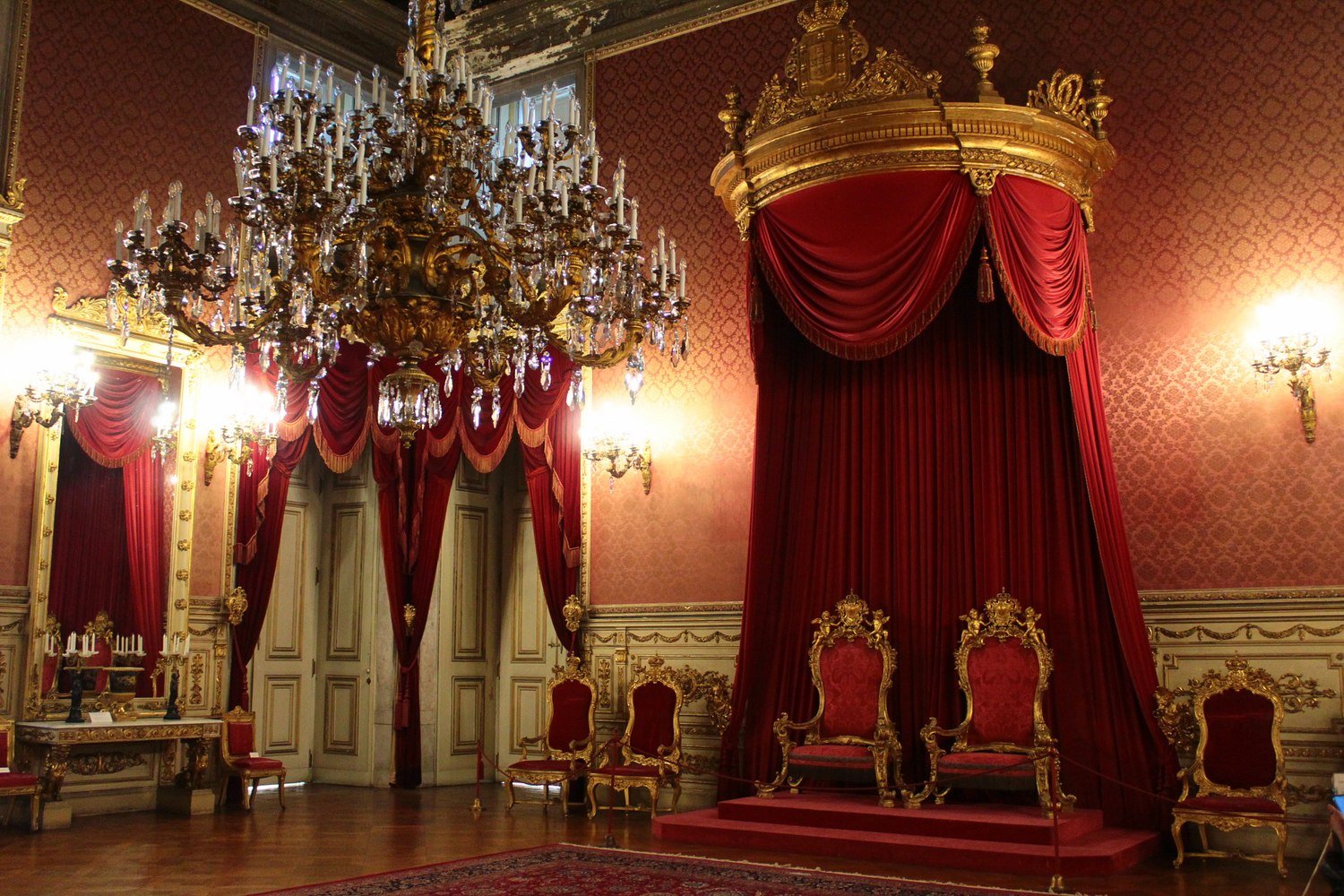
A change of scale
Compare private apartments with rooms of state
The ground floor includes private apartments, while the noble floor was largely devoted to gala receptions, banquets and balls. The national museum description highlights the preserved nineteenth-century interiors, including the monarchs’ quarters and the Throne Room.
Notice how the visit moves between spaces intended for daily life and rooms designed to receive an audience. Instead of counting chandeliers, compare the arrangement of seats, the distance between doors and the effect of repeated decorative elements. The formal spaces are impressive, but the smaller rooms often help explain the people behind the institution. Follow the visitor circuit and use the room labels to keep each setting in context.
Photo: Lisboa1143 / Wikimedia Commons · Sala de banquete · CC BY-SA 4.0. Resized and recompressed; original framing retained.
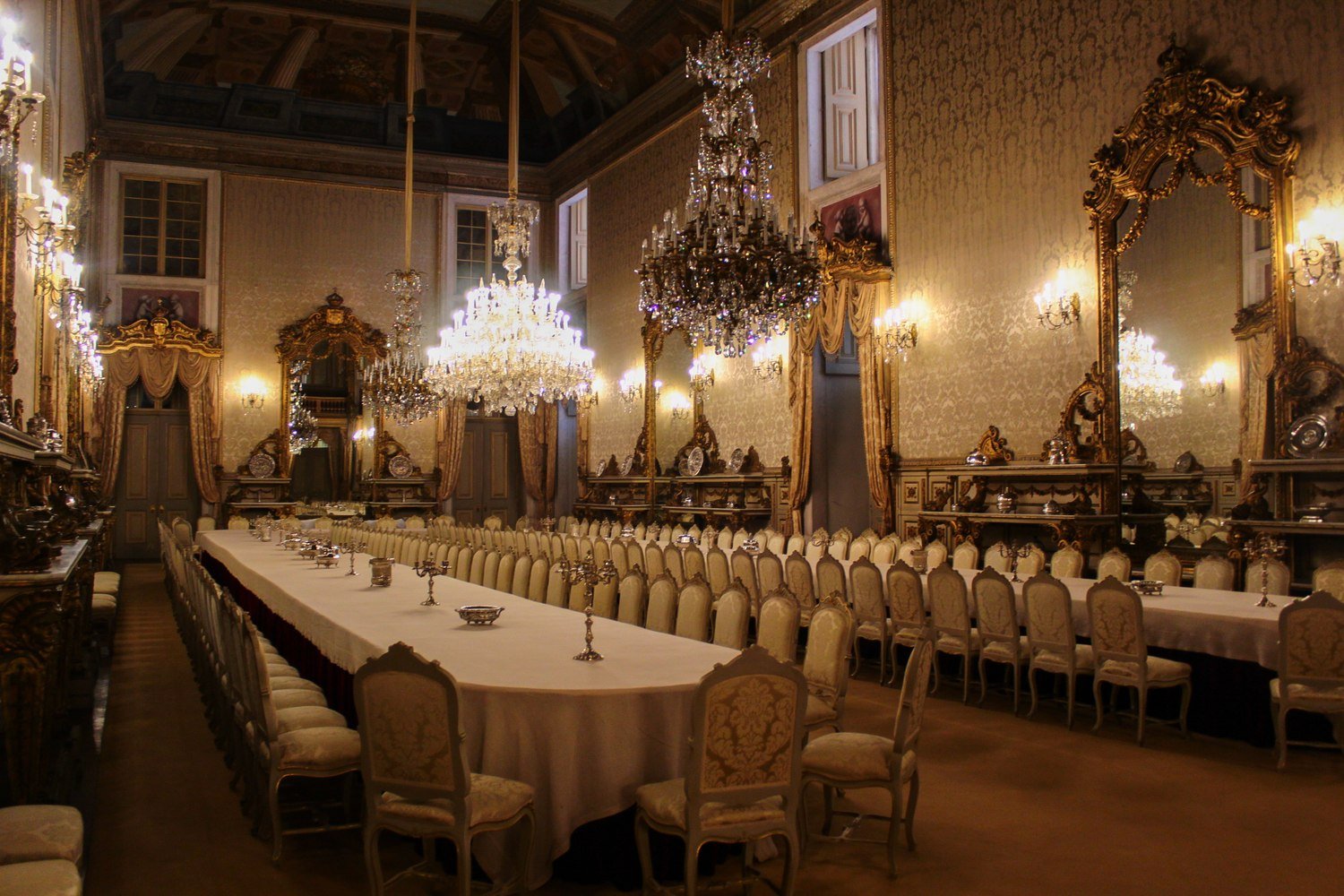
Look beyond the overall splendour
Choose a thread through the decorative arts
The palace collections span furniture, ceramics, textiles, painting, glass and other arts. Their strength for a visitor lies in seeing objects within furnished rooms. A piece can be appreciated for its workmanship and for the way it contributes to the surrounding interior.
Pick one interest to follow through the route. You might compare textiles, examine the forms of furniture or notice how paintings relate to the room around them. Read labels where a particular work catches your eye rather than trying to absorb every name. With children, looking for a recurring material or colour can make the circuit more engaging while keeping attention on the collection. Respect barriers and leave the objects untouched.
Practical details before you travel
Plan enough time and a comfortable arrival
The palace stands at Largo da Ajuda, above Belém. Its visitor page suggests an average visit of one hour and forty-five minutes. Treat this as a useful planning reference and add time for your journey, a pause and any personal interests. Check current opening days and notices before fixing a reservation elsewhere.
Consider transport up the hill if a climb would reduce your enjoyment. The accessibility information describes a lift between museum floors and assistance for visitors with reduced mobility. Discuss individual needs with the palace in advance. The journey to the entrance and the museum circuit are different parts of the day, so confirm both when planning a comfortable visit.
A palace visit with breathing room
Combine Ajuda with one clear Belém priority
Ajuda can form the main cultural visit of a day in western Lisbon. After the palace, choose one further interest around Belém and leave space for a meal or a riverside walk. Our related Belém guide helps you develop that part of the day. Check the route between places before assuming that nearby names mean a level walk.
If you also want the Royal Treasure Museum in the Ajuda complex, review its visitor information and ticket scope separately. Give each collection enough attention rather than compressing them into one hurried stop. A day with Ajuda and one carefully chosen addition is often more satisfying than moving continuously between queues, especially when your interests lie in interiors and objects.
Our suggestion
Give the rooms time to explain themselves
Plan Ajuda as a substantial visit, then continue with one Belém interest. Following a material or a theme through the rooms can reveal more than trying to photograph every ornate surface.
Planning a Walkborder tour
Practical questions about your tour
Most tours operate in normal rain or fog. The route may be adapted for safety, visibility or monument conditions. Cancellation only occurs when operation is unsafe or impractical.
Yes, within the available time, geography, ticket conditions and operational limits. Major changes should be agreed before confirmation.
Explore Lisbon
Explore Lisbon with a palace visit in mind
Discover Walkborder’s Lisbon tour and its actual route through the city. If Ajuda is a priority, discuss the palace visit separately before confirmation; it is not a listed stop, and monument tickets are excluded from the Lisbon tour.