At a glance
What makes Jerónimos Monastery worth understanding?
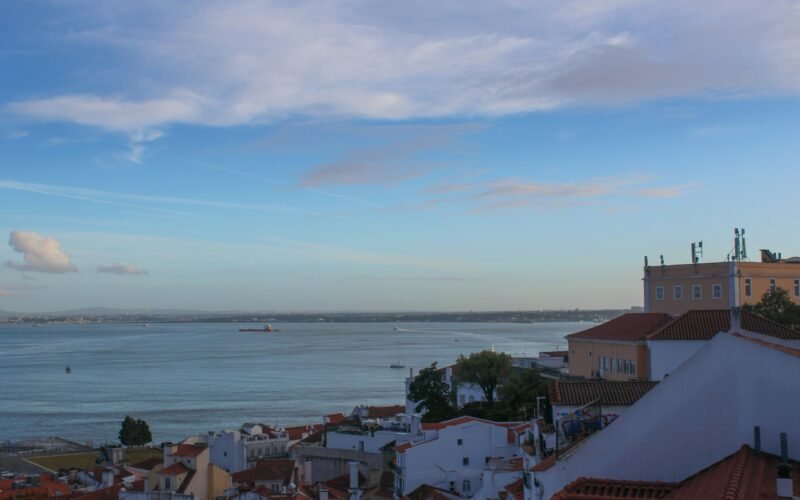
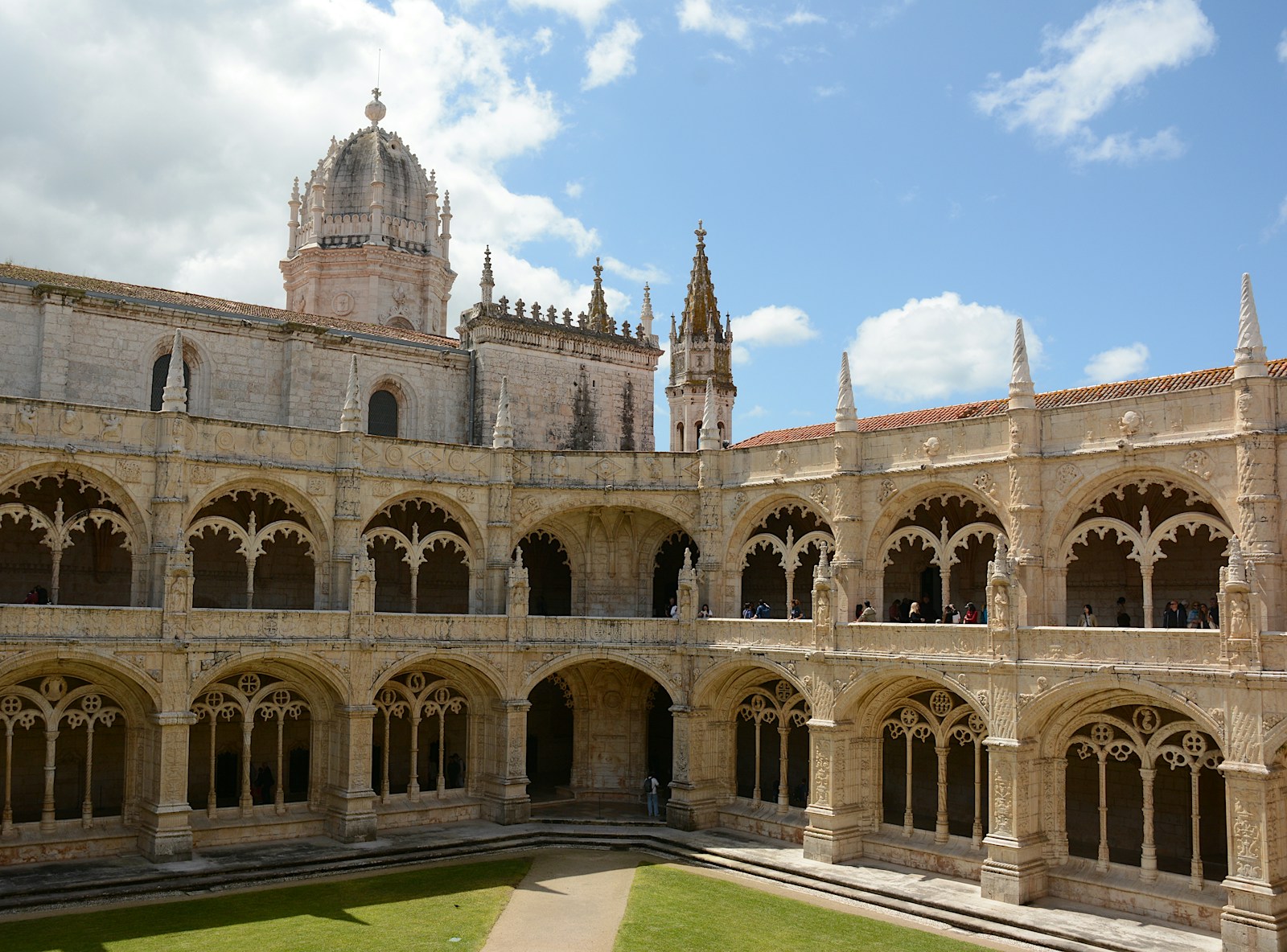
Set in Lisbon’s Belém district, Jerónimos Monastery is a landmark of the Manueline period. Its history is best read alongside the wider UNESCO property and the maritime setting that shaped the area.
History and setting
Details to notice
History
A landmark of Manuel I’s Lisbon
Construction of Jerónimos Monastery began in 1502 during the reign of Manuel I. The complex was dedicated to Santa Maria de Belém and entrusted to the Order of Saint Jerome. Its location near the Tagus connects the monument to a period when Lisbon’s riverfront was closely tied to Portugal’s maritime expansion.
UNESCO lists the monastery together with the nearby Tower of Belém as one World Heritage property. That shared designation gives useful context, but it does not make the buildings a single attraction: each has its own spaces and visitor arrangements. For the historical framework, see UNESCO’s description of the property.
What to notice
Read the architecture one space at a time
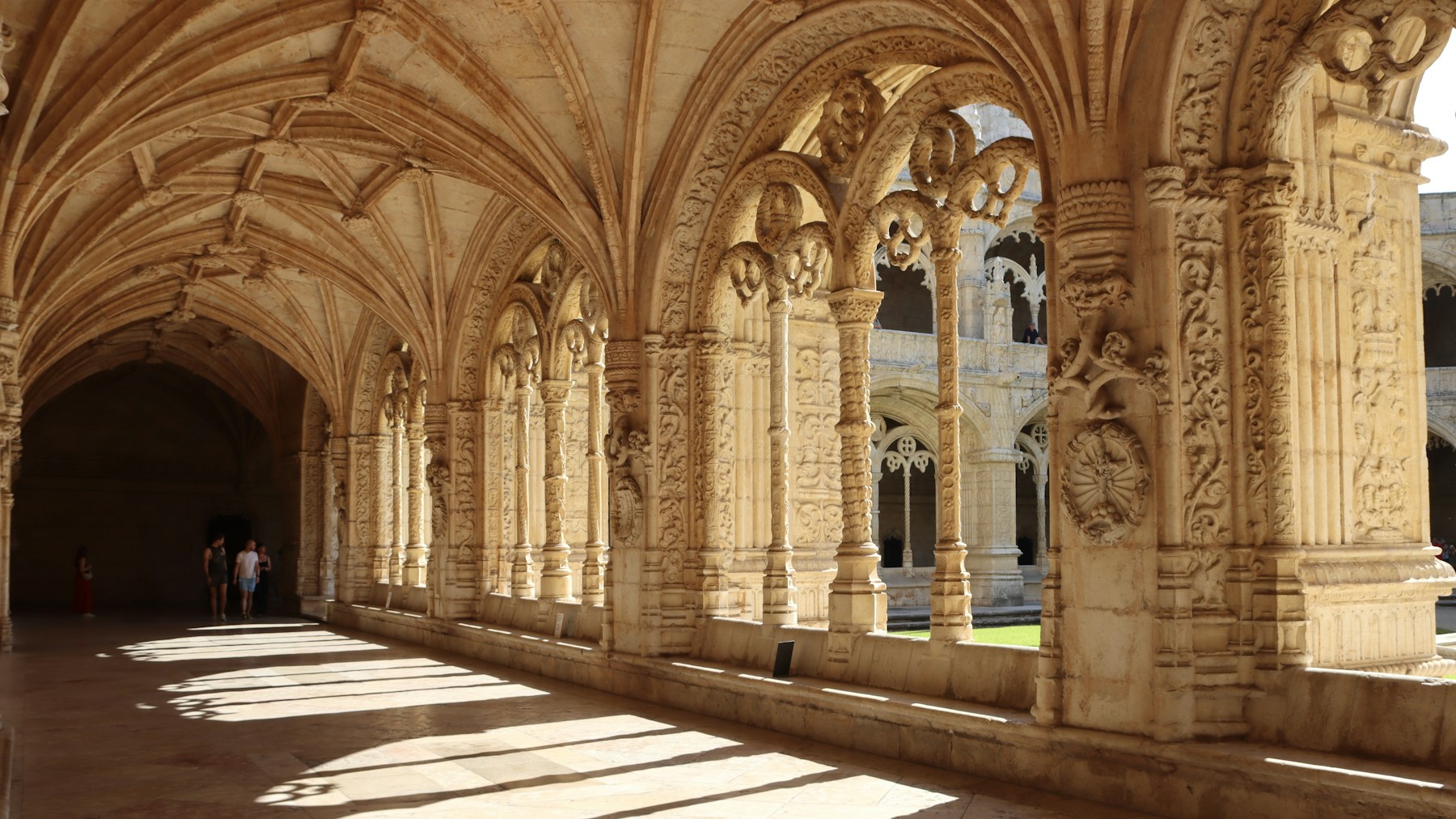
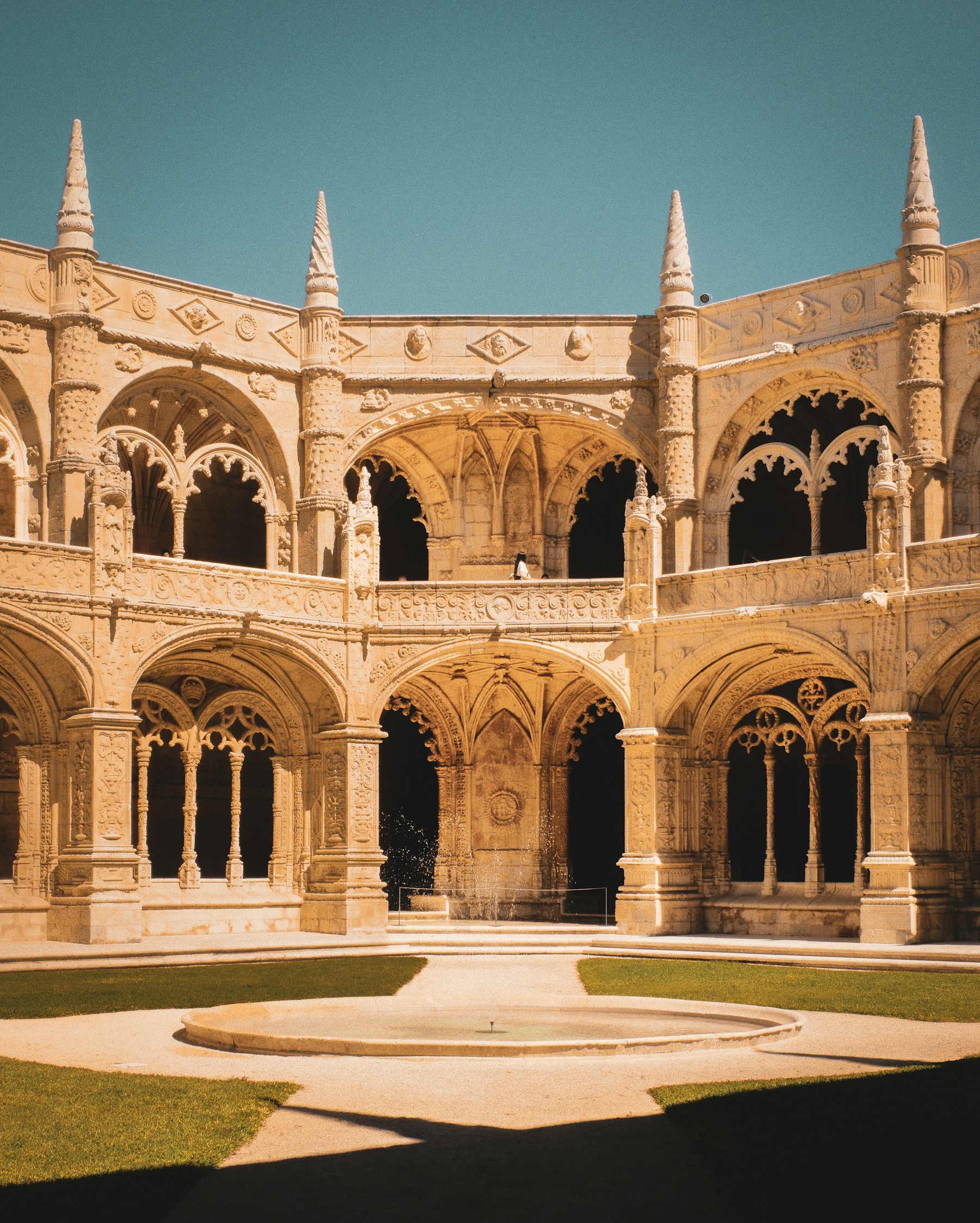
Rather than trying to take in every carved surface at once, pause at the transition between the church and the cloister. The open galleries frame the courtyard from two levels, while the stonework rewards a slower look at its arches, columns and ornamental details. The church adds another scale to the visit, with a broad interior and a high vaulted structure.
The Manueline style is associated with the reign of Manuel I and appears here in an architectural language that joins late Gothic forms with carefully worked stone decoration. The official VisitPortugal overview offers further context on the church and monastery. Photograph by Farnaz Kohankhaki via Unsplash, used under the Unsplash License.
Visitor guidance
Plan around the monument, not a fixed timetable
Give the monastery a dedicated place in your Lisbon plans instead of treating it as a quick exterior stop. Visitor arrangements, ticketing and access can change, so check the official Jerónimos and Belém Tower visitor information close to your visit. The church, cloister and other areas may follow distinct conditions.
Belém is also a useful setting for understanding how Lisbon grew along the river. If you are comparing ways to organize a day from the city, our guide to planning a private day trip from Lisbon without rushing provides broader itinerary context. A tour route through the Belém area does not by itself confirm admission to the monastery or Tower; check the specific published proposal before relying on an interior visit.
A considered visit
Leave time to look closely
Choose a pace that leaves room to notice the shift from the church’s scale to the more intimate cloister galleries. Before setting the rest of the day, verify the monument’s current visitor guidance and decide which areas matter most to you. This keeps the visit grounded in what is open and available on your date rather than in a fixed itinerary assumption.
Common question
Jerónimos Monastery: visitor questions
No. UNESCO includes Jerónimos Monastery and the Tower of Belém in one World Heritage property, but they are separate monuments with distinct visitor spaces and arrangements. Check the official information for each before planning admission; a route through Belém does not itself confirm entry to either monument.
Explore Lisbon
Plan a wider Lisbon and Belém day
See the published Private Lisbon Tour for its current route description. The page describes the Belém area; confirm any monument entry separately in the agreed proposal.