At a glance
What to know before visiting
Checked 20 October 2026: the National Tile Museum announces closure for PRR refurbishment works. This is a guide to its collection and to planning responsibly, not confirmation that a museum visit is currently available. Check the museum’s own updates before making the journey.
Your main focus
Plan your day
A collection rooted in a former convent
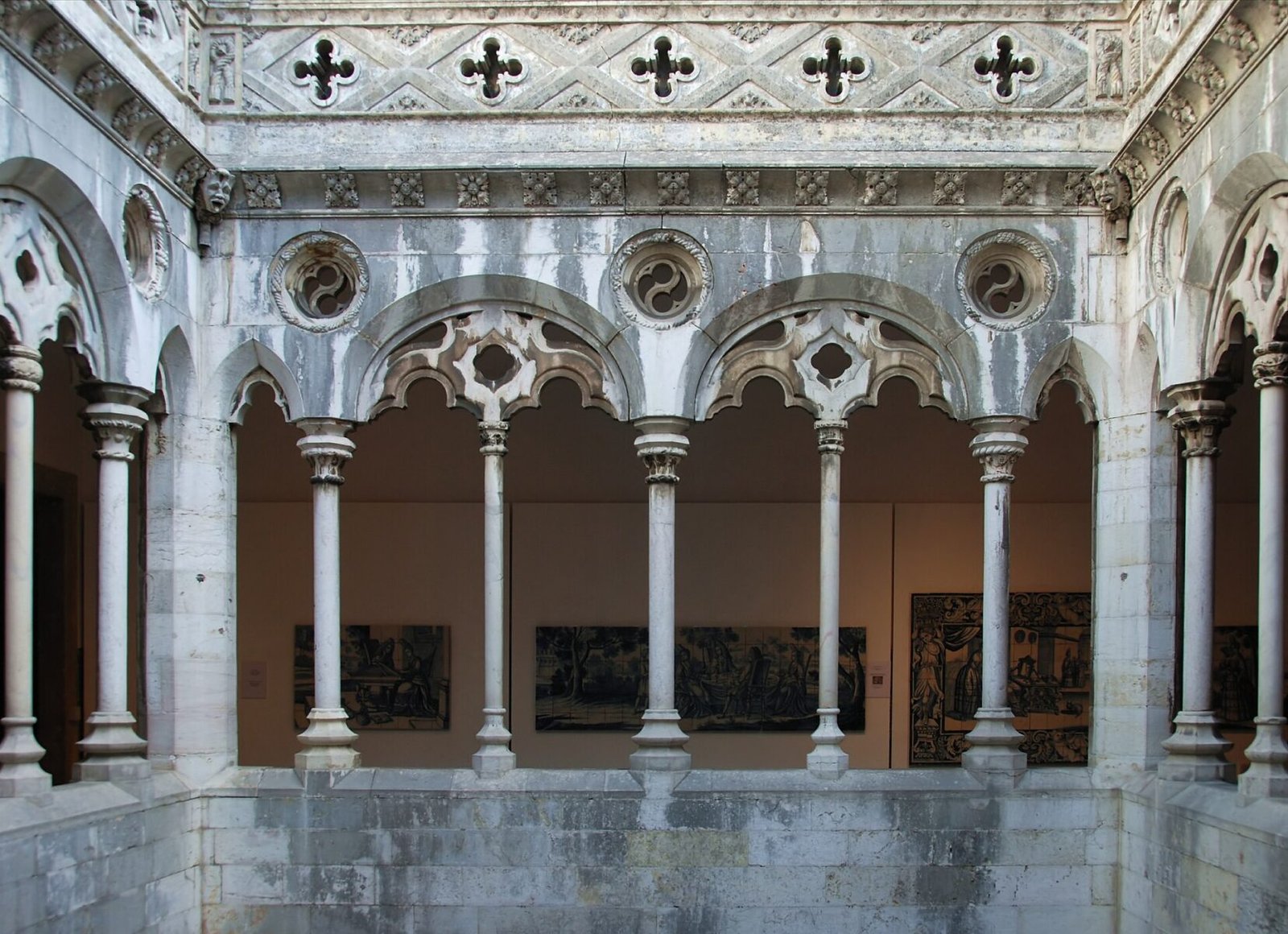
The National Tile Museum is associated with the former Madre de Deus convent in eastern Lisbon. That setting connects architecture, decoration and the history of azulejos rather than presenting tiles only as isolated pictures. The official site identifies the convent’s foundation in 1509. It is a useful starting point for understanding why a religious building and a ceramics collection belong in the same story.
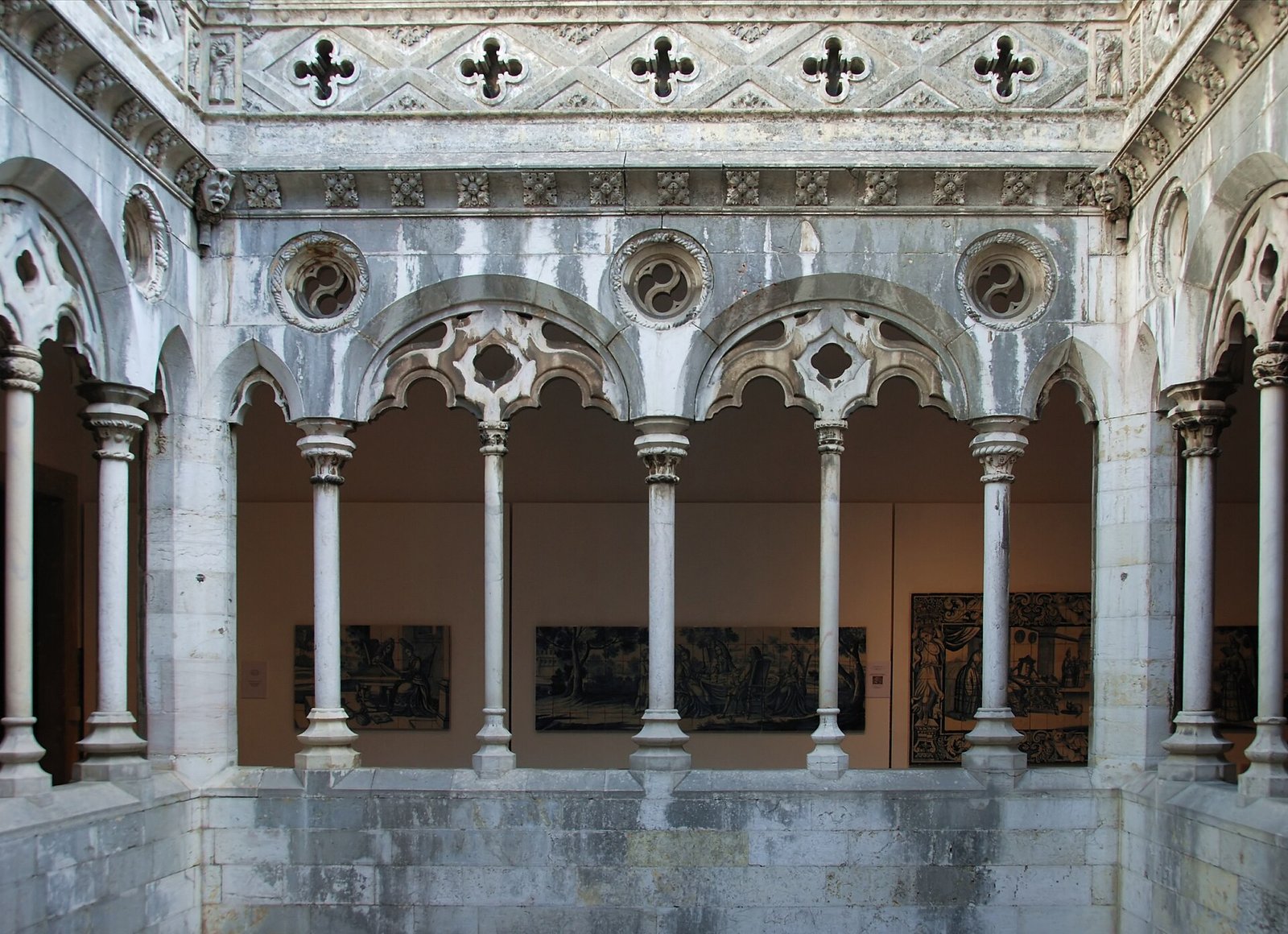
Photographs in this guide show historic surroundings or collection material, not a promise of current access. The museum’s official website currently carries the closure notice. A historic image of an open gallery cannot establish that the same room or display is available today.
Photo: Alvesgaspar · CC BY-SA 3.0. Resized image.
Learn to read a tiled surface
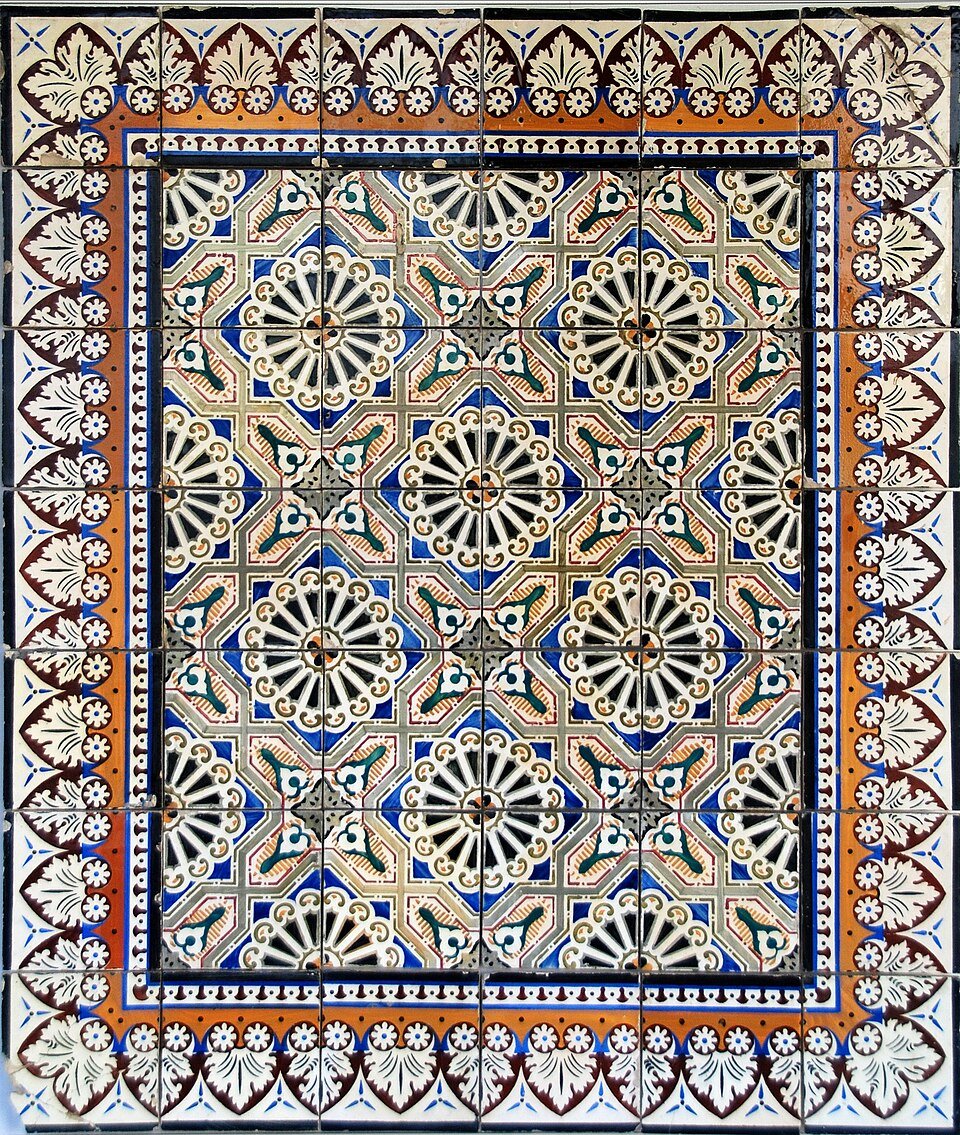
Start with the unit of the tile, then step back to see the larger composition. A repeated motif may create a border or an apparently continuous pattern; a narrative panel asks you to follow figures, gestures and places. Colour is only one part of the experience. Glaze, drawing, joins and the way a panel fits its setting help explain why tiles matter in Portuguese buildings.
The patterned panel photographed here offers a starting point for comparing individual tiles with the complete design. Use it as an exercise in looking: follow one shape across the joins, then notice how the border changes the whole surface. Do not assume that every blue-and-white wall elsewhere in Lisbon belongs to the same period or workshop.
Photo: Alvesgaspar · CC BY-SA 3.0. Resized image.
Plan around the closure, not around old listings
Do not rely on a directory’s ordinary opening hours while the official museum announces works. No reopening date is confirmed in this guide. Before buying transport or building a day around an interior visit, consult the museum’s current notice and any specific arrangements it publishes. A museum shop or off-site activity does not automatically mean access to the permanent galleries.
Meanwhile, azulejos can be observed as part of Lisbon’s streets and buildings, respecting private property and access rules. That is a different experience from visiting the museum. Our guide to planning an unrushed Lisbon day trip helps keep a programme realistic: agree what is available first, then choose where to spend your time.
Our suggestion
Make room for the experience
Use the closure period to choose what interests you about azulejos: pattern, storytelling or their relationship with architecture. Save the museum visit for a date whose access you have confirmed directly.
Planning a separate Walkborder tour
Weather and itinerary flexibility
Most tours operate in normal rain or fog. The route may be adapted for safety, visibility or monument conditions. Cancellation only occurs when operation is unsafe or impractical.
Yes, within the available time, geography, ticket conditions and operational limits. Major changes should be agreed before confirmation.
A relevant Walkborder route
Explore the wider journey
Walkborder’s private Lisbon tour explores historic neighbourhoods and Belém. The National Tile Museum is not listed in its itinerary, and this article does not imply museum admission or access during closure. Enquire about a separate city programme if tile heritage is your main interest; any special visit must be confirmed individually.