At a glance
What is the best way to visit Elvas?
Combine a walk in the historic centre with one outer fort and a considered view of the Amoreira Aqueduct. The UNESCO property is a connected defensive landscape, so a focused route explains more than rushing to every structure.
City or outer fort?
Leave room between stops
Walls, hills and the border
Read the city as a defensive landscape
Elvas is most rewarding when you look beyond a single fortress. Its historic centre, surrounding defences and outlying forts form a system shaped by the need to control the border with Spain. From a distance, notice how the walls follow and reshape the ground. Closer in, their angles and changes of level reveal that defence was a matter of geometry as well as height. The city is a useful place to see how military design can organise an entire landscape.
The UNESCO description of Elvas explains the relationship between the town, its forts and the water supply. Within that wider story, the streets remain part of a living city. Walk into the centre, pause in a square and leave time for everyday details between the monuments. Churches, houses and former military buildings show that a fortified town was also a place to live, work and worship.

A wider view of Elvas
Forte da Graça and the aqueduct: two different kinds of engineering
Forte da Graça occupies a hill north of the city. Its position makes clear why the ground around Elvas mattered to its defenders. The fort’s geometric forms reward a slower look: notice changes in direction, the relationship between walls and slopes, and the way the structure commands its setting. The official monument introduction places it within eighteenth-century military architecture. Check the current visiting arrangements before including interior areas in your plan.
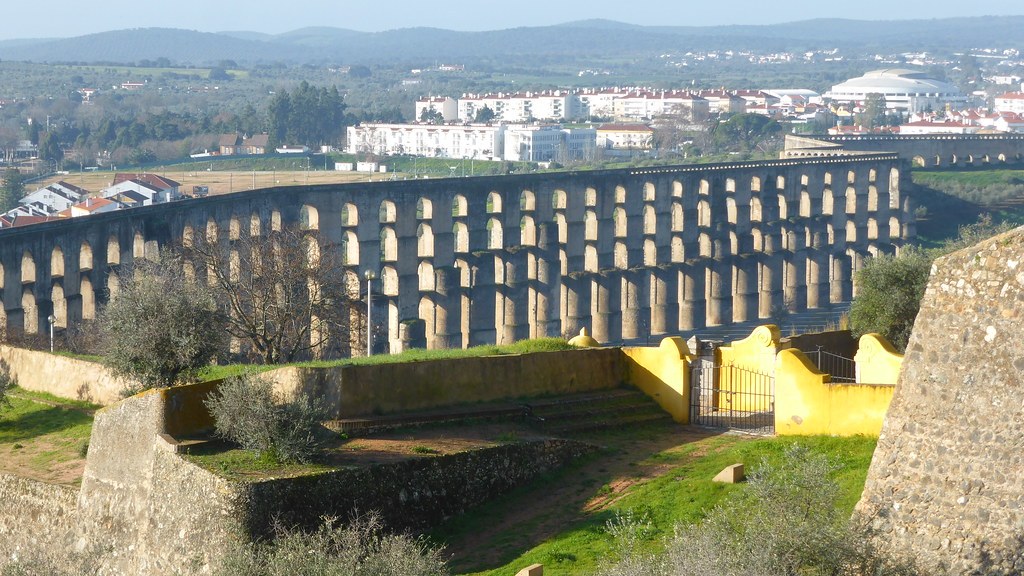
The Amoreira Aqueduct tells a complementary story. Supplying water was essential to a defended city, and the long sequence of arches makes that practical task a striking part of the approach to Elvas. View it from a safe public stopping point and observe how repetition gives the structure its rhythm across the landscape. Do not assume that roadside space is suitable for stopping or walking. Together, fort and aqueduct make the city’s history tangible without requiring you to visit every defensive component.
Plan a visit with room to pause
Balance monuments, streets and the Alentejo pace
Choose your main interest before arranging the day. Military-history enthusiasts may want to devote more attention to a fort; other visitors may prefer a shorter monument visit and a longer walk in the old town. These are different experiences, not competing versions of a complete checklist. Wear shoes suited to historic surfaces, take water and plan exposed stops around the conditions. If mobility is a concern, check individual routes, slopes and entrances rather than assuming that every part of the site is accessible.
The official Elvas visitor introduction gives useful orientation and suggests local sericaia with Elvas plums as a regional flavour to look for. Leave time for a meal or café pause without assuming any particular supplier is included in a tour. If you are combining several inland destinations, our guide to realistic multi-day routes in Portugal helps avoid overloading the programme. Give Elvas enough space to connect its monuments with the town around them, rather than reducing the visit to one fort photograph.
Photograph of the Amoreira Aqueduct: Stephen Colebourne, CC BY 2.0. Resized and compressed; the photograph remains under its original licence.
Our suggestion
Choose one fort and enjoy the town between the walls
Begin with the historic centre, add the outer fort that best matches your interests and include an appropriate aqueduct viewpoint. Confirm access first and protect time for a relaxed Alentejo pause.
Questions about the separate Walkborder mainland tour
Mainland tour: weather and itinerary flexibility
Most tours operate in normal rain or fog. The route may be adapted for safety, visibility or monument conditions. Cancellation only occurs when operation is unsafe or impractical.
Yes, within the available time, geography, ticket conditions and operational limits. Major changes should be agreed before confirmation.
Explore the Alentejo over several days
Continue beyond a day in Elvas
Walkborder’s 3-day Alentejo tour covers Évora, Monsaraz, Alqueva, São Pedro do Corval, Arraiolos and Azeitão. Elvas is not listed in the published route, so discuss any separate addition before confirming.