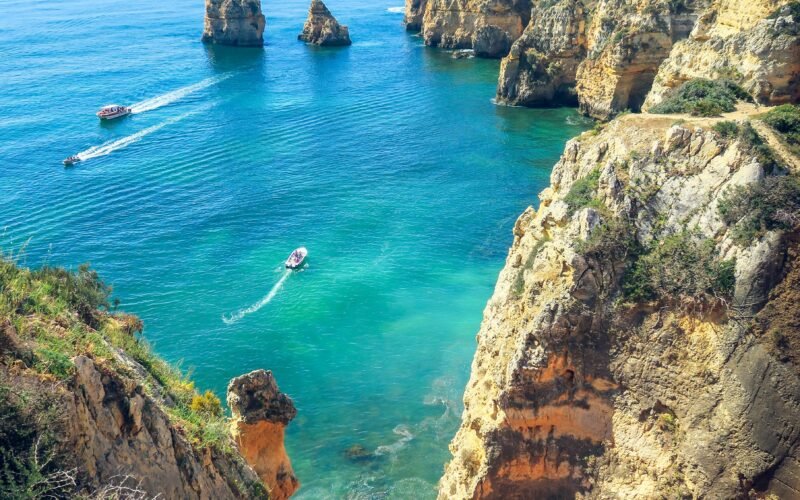
At a glance
What should you see around Sagres?
Combine the cape, lighthouse and the wider fortress landscape. The point is not to collect viewpoints but to understand how the land, sea and navigation history fit together.
Start at the headland
Add Sagres with intention
Cliffs, lighthouse and maritime memory
A headland built around navigation
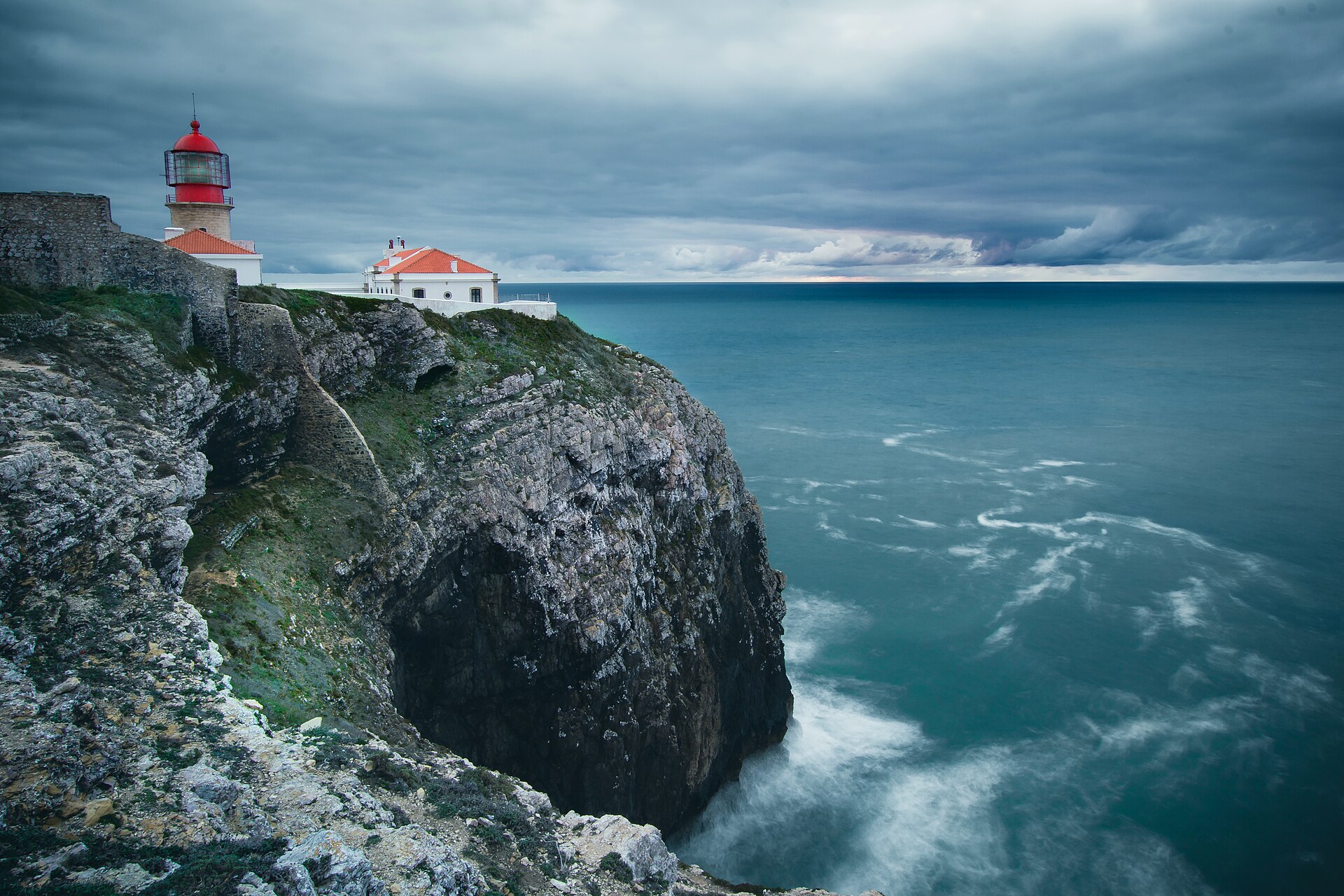
Cabo de São Vicente is one of the defining headlands of the western Algarve. The cliffs, open Atlantic and lighthouse create a landscape that explains why this coast mattered to sailors long before it became a viewpoint for visitors. The cape’s visitor information provides current orientation; treat access and safety notices as part of the visit.
Look beyond the lighthouse itself. The scale of the cliffs, the distance between viewpoints and the exposure to wind are the essential facts of the place. A short stop can show the drama, but more time lets you read the geology, sea and navigation story without standing in one exact spot.
Photo: Rui Glória / Wikimedia Commons — source · CC BY-SA 4.0.
Fortress and coast
Sagres adds a second landscape
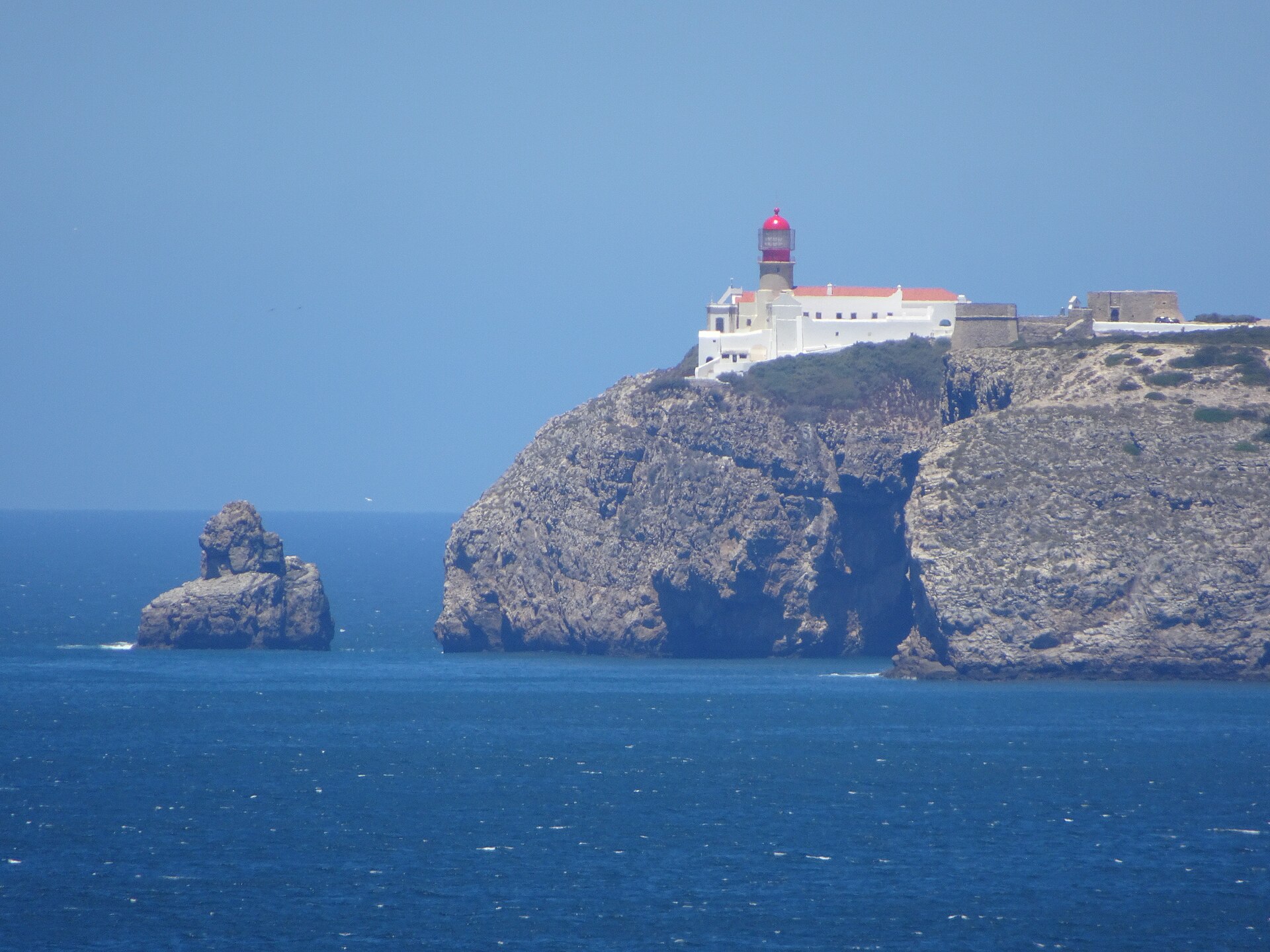
Moving between the cape and Sagres changes the emphasis from a lighthouse headland to a broader coastal setting. The fortress area and surrounding cliffs connect the town to Portugal’s maritime memory, but the landscape is also a real environment with wind, uneven paths and exposed edges. Follow signs and current local instructions rather than improvising a route close to the cliff.
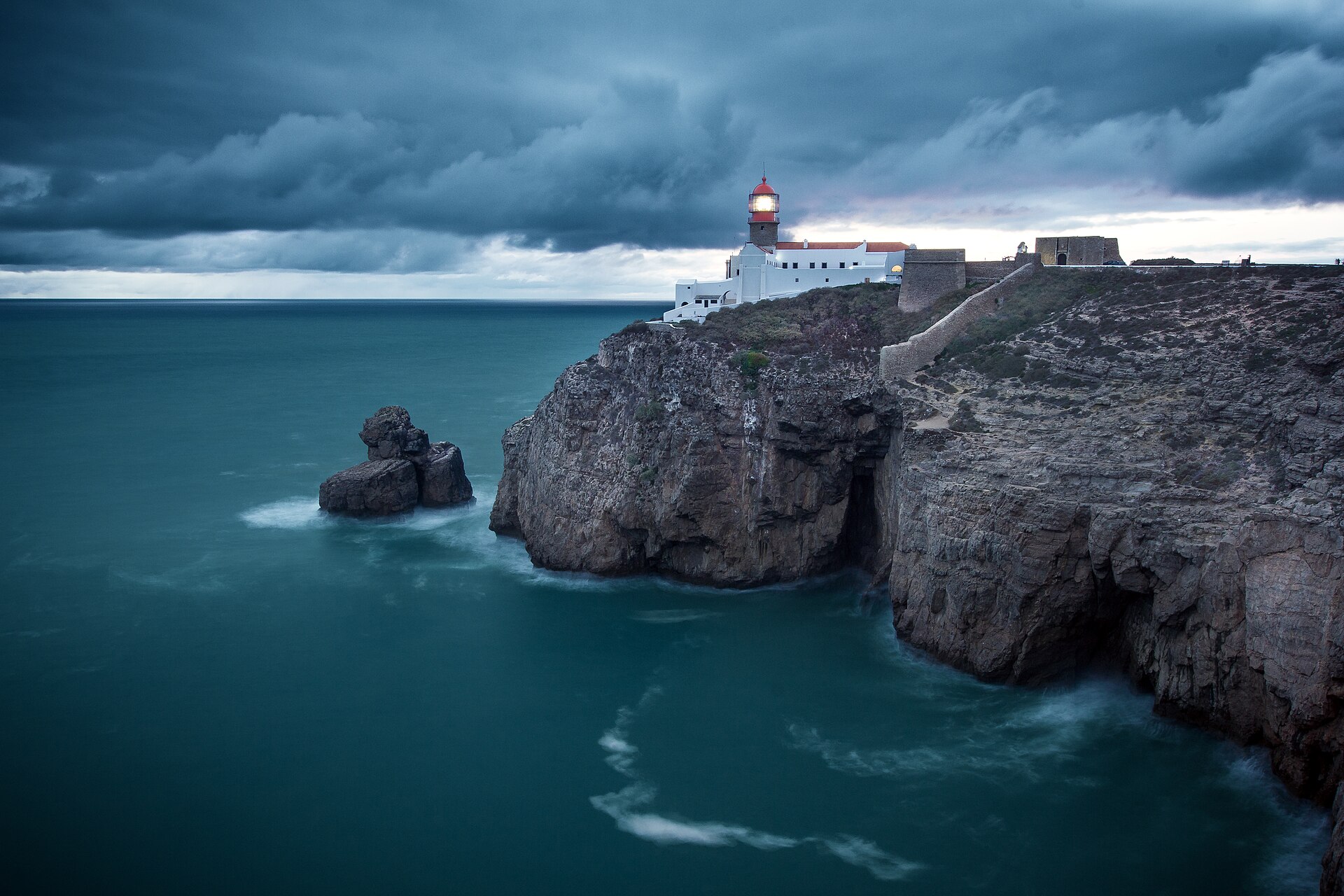
Weather can be part of the experience: a clear horizon, low cloud or strong wind all produce different views. Avoid promising a particular sunset, sea state or bird sighting. Instead, plan enough flexibility to enjoy the coast safely in the conditions you actually find.
Photo: Auvideo / Wikimedia Commons — source · CC BY-SA 4.0.
Practical planning
How to plan Sagres from Lisbon or the Algarve
Sagres and Cabo de São Vicente deserve a dedicated coastal block rather than a rushed detour at the end of a long Algarve day. Wear shoes with a secure sole, carry a layer against the wind and check current access information for the lighthouse and fortress. Keep driving time realistic and never treat optional boat trips or interiors as guaranteed inclusions.
Our guide to choosing one or two days in the Algarve helps frame the time decision. Walkborder’s two-day private Algarve tour is the closest commercial relation; confirm the exact route and whether Sagres is included on your dates before booking.
Photo: Rui Glória / Wikimedia Commons — source · CC BY-SA 4.0.
Our suggestion
Leave room for the weather and the horizon
Plan a route that can slow down at the cape. Sagres is strongest when the Atlantic, cliffs and wind have space in the day, not when every stop has been reduced to a photograph.
Useful questions for a separate Walkborder tour
Weather and itinerary flexibility
Most tours operate in normal rain or fog. The route may be adapted for safety, visibility or monument conditions. Cancellation only occurs when operation is unsafe or impractical.
Yes, within the available time, geography, ticket conditions and operational limits. Major changes should be agreed before confirmation.
Continue along the Algarve coast
Give Sagres the time it needs
Cabo de São Vicente and Sagres are a dedicated coastal stage. Walkborder’s two-day private Algarve tour is the closest commercial option; confirm the route, conditions and any optional activities before booking.