At a glance
What should you look for in Arraiolos?
Arraiolos is known for wool-embroidered rugs worked on a fabric foundation, not a generic loom-weaving process. The town also has a distinctive rounded castle enclosure above it. The interpretive centre provides a way to learn about the rugs before choosing whether to explore further or make a purchase.
Choose your focus
Plan a rewarding visit
A hilltop complement to the craft story
Read the castle’s rounded outline above the town
The castle enclosure gives Arraiolos a recognisable outline above its streets. Its rounded form offers a different visual character from a long sequence of straight walls and towers. Begin by noticing how the enclosure relates to the hill and the town below, rather than making a particular interior or high point the only purpose of the visit.
The municipality’s castle account places construction in the early fourteenth century under Dinis and identifies the Church of Salvador within the ensemble. Use that context to understand the setting, then confirm the current areas open to visitors. Gradients and historic surfaces matter when choosing a route. A comfortable view of the castle and time in the town can still form a worthwhile day if a longer ascent or a specific interior does not suit the group.
Photo: Filipe Nobre · Unsplash License. Resized and recompressed; original framing retained.

Wool embroidery and the interpretive centre
Learn what makes the rugs distinctive
Arraiolos rugs are traditionally made through wool embroidery on a fabric foundation. That distinction is useful: the interest lies in stitch, material and design, rather than assuming a loom demonstration explains every textile tradition. The craft has a documented history across centuries and a varied decorative vocabulary. Looking at a piece closely can reveal a level of work that is easy to miss when it is seen only as a souvenir.
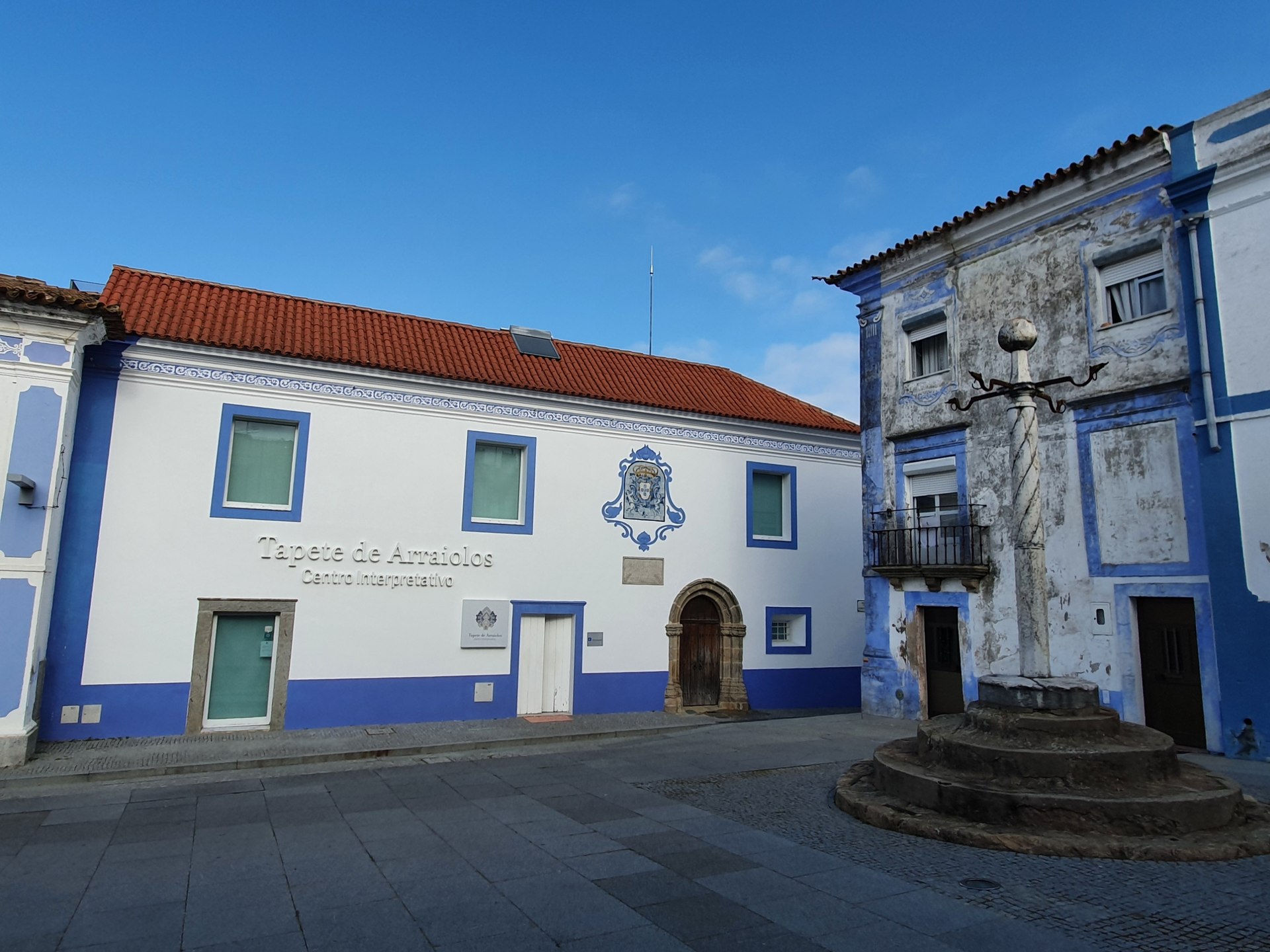
The Centro Interpretativo do Tapete de Arraiolos is a dedicated place to connect that technique with the rugs’ long history and changing designs. Its interpretation helps you see a piece as skilled work within a cultural tradition, adding context before you explore further or consider a purchase. Check the current programme when planning your visit and let the documented story guide your understanding of the craft’s varied influences.
Photo: GualdimG · CC BY-SA 4.0. Resized and recompressed; original framing retained.
Questions worth asking
Make the town and any craft purchase part of a considered visit
After the castle setting and rug interpretation, give the streets time rather than rushing straight into another town. If you want to choose a rug, ask how the piece was made, what materials were used and what the maker can explain about the design. These questions help connect an object with the craft, without assuming every sale includes a workshop visit or that production will be taking place when you arrive.
Our Évora travel guide offers a different cultural focus for a wider journey, combining well with an interest in the region’s craft traditions. Decide which part of Arraiolos you most want to understand and leave time for it. Walkborder’s three-day Alentejo tour includes the town, with the specific experiences within that stop agreed before booking.
Our suggestion
Learn before choosing a piece
Use the interpretive story to understand the embroidery and patterns, then ask informed questions if you want to buy something. Pair that close attention with a comfortable view of the castle for a visit at two different scales.
Planning a Walkborder tour
Weather and itinerary flexibility
Most tours operate in normal rain or fog. The route may be adapted for safety, visibility or monument conditions. Cancellation only occurs when operation is unsafe or impractical.
Yes, within the available time, geography, ticket conditions and operational limits. Major changes should be agreed before confirmation.
Explore Arraiolos within an Alentejo journey
Choose the experiences within the town stop
Walkborder’s three-day Alentejo tour includes Arraiolos in its programme. Confirm the actual visits within that stop: interpretive-centre admission, castle or church interiors and craft demonstrations are not automatically guaranteed. Consult the published route and agree any specific request before booking.