A detail to look for
Start with the guitar in the paving at Largo da Severa, then follow the names and images back through the surrounding streets.
The guitar in the square
Largo da Severa takes its name from Maria Severa Onofriana, the nineteenth-century singer who lived in Mouraria. The Fado Museum records her death on Rua do Capelão in 1846. The square gives that history a scale you can take in at a glance: the name on the house, a plaque on the façade and the guitar in the stone.
The space is small enough to see those details together. You can move from the shape of the instrument to the name of the singer without crossing a main road or going inside a building. It is an outdoor introduction to a story often told in concert halls.
Two singers on one street
Fernando Maurício was born on Rua do Capelão in 1933. The Fado Museum records that he began singing as a boy in a tavern on the same street. In 1989 Amália Rodrigues unveiled memorial plaques there for Maurício and Severa. The two names bring different generations of singing into the same few metres.
Maurício’s childhood also says something about how people learned the music. A young singer could hear more experienced performers close up in places used by neighbours. That proximity helps explain why a modest street can matter as much to musical history as a grand theatre.
A staircase painted with music
On the Escadinhas de São Cristóvão, between Rua da Madalena and Rua de São Cristóvão, a fado mural gives the story a different scale. As you climb, the painted figures come into view a few at a time. Pause on a landing and look back at the relationship between the wall and the steps.
The staircase makes a good companion to the paving at Largo da Severa. One image lies flat beneath your shoes. The other rises beside you while the street climbs. Both are things you meet while making your way through the neighbourhood.
Listen for the space between the notes
If you also hear a performance, pay attention to how the Portuguese guitar and the voice take turns. A brief instrumental line can leave room for a sung phrase to settle. UNESCO added fado to its intangible heritage list in 2011, recognising a living musical practice rooted in Lisbon communities.
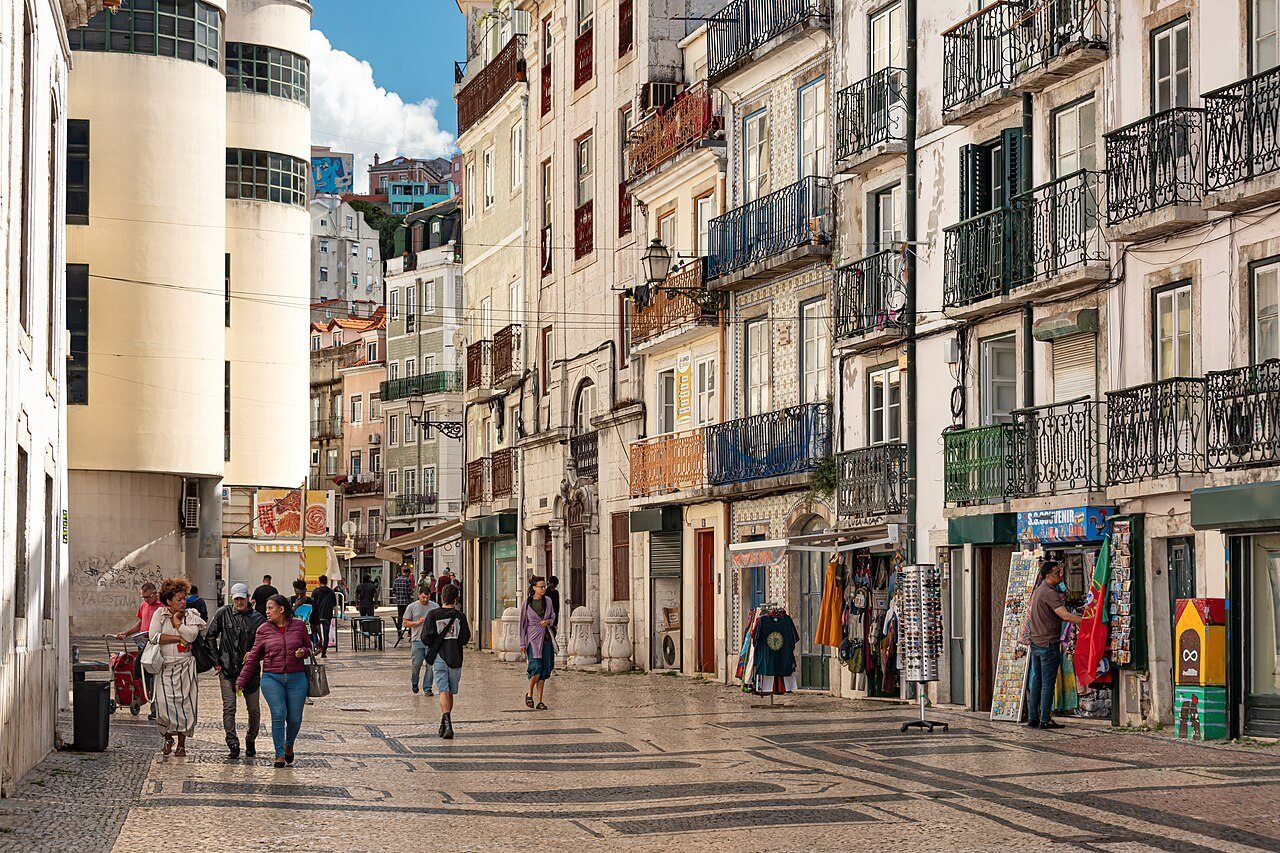
Leave time simply to walk between the square and the stairs. Part of Mouraria’s appeal is the change from the broad space at Martim Moniz to the narrower streets above it. The names, images and changes of scale show what this neighbourhood adds to the story of Lisbon.
Photo: Jorge Franganillo. Source · Licence. Image resized or re-encoded.
See more of Lisbon
For a wider view of the region, explore the published itinerary and check the stops and details that fit your interests.