At a glance
Is Carmo Convent worth visiting?
Choose Carmo if you enjoy architecture, archaeology or understanding how Lisbon remembers the 1755 earthquake. The visit combines the ruined church with the Carmo Archaeological Museum; allow time for both.
What to notice
Before you go
Earthquake, rebuilding and memory
Read the ruined church in layers
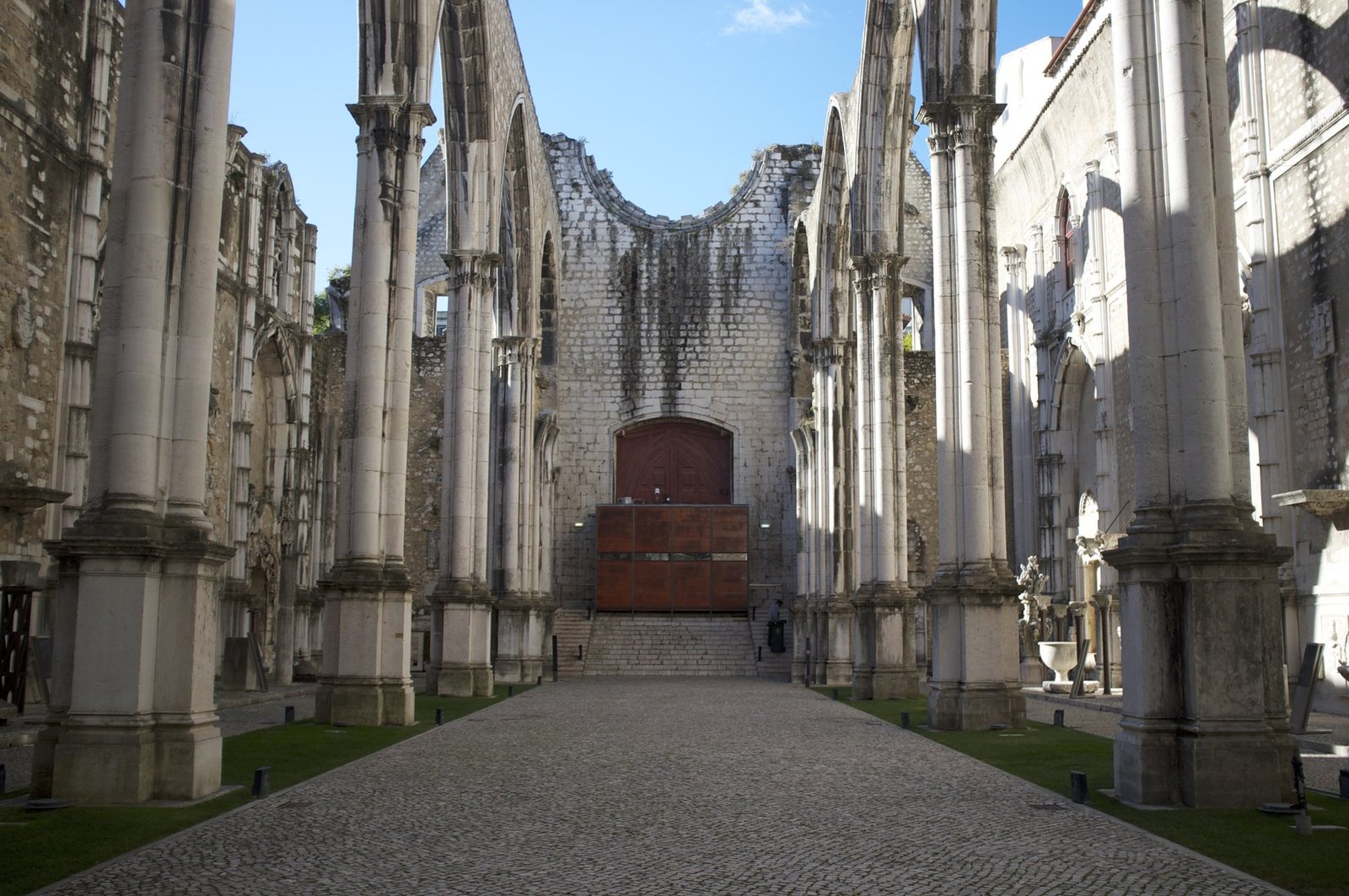
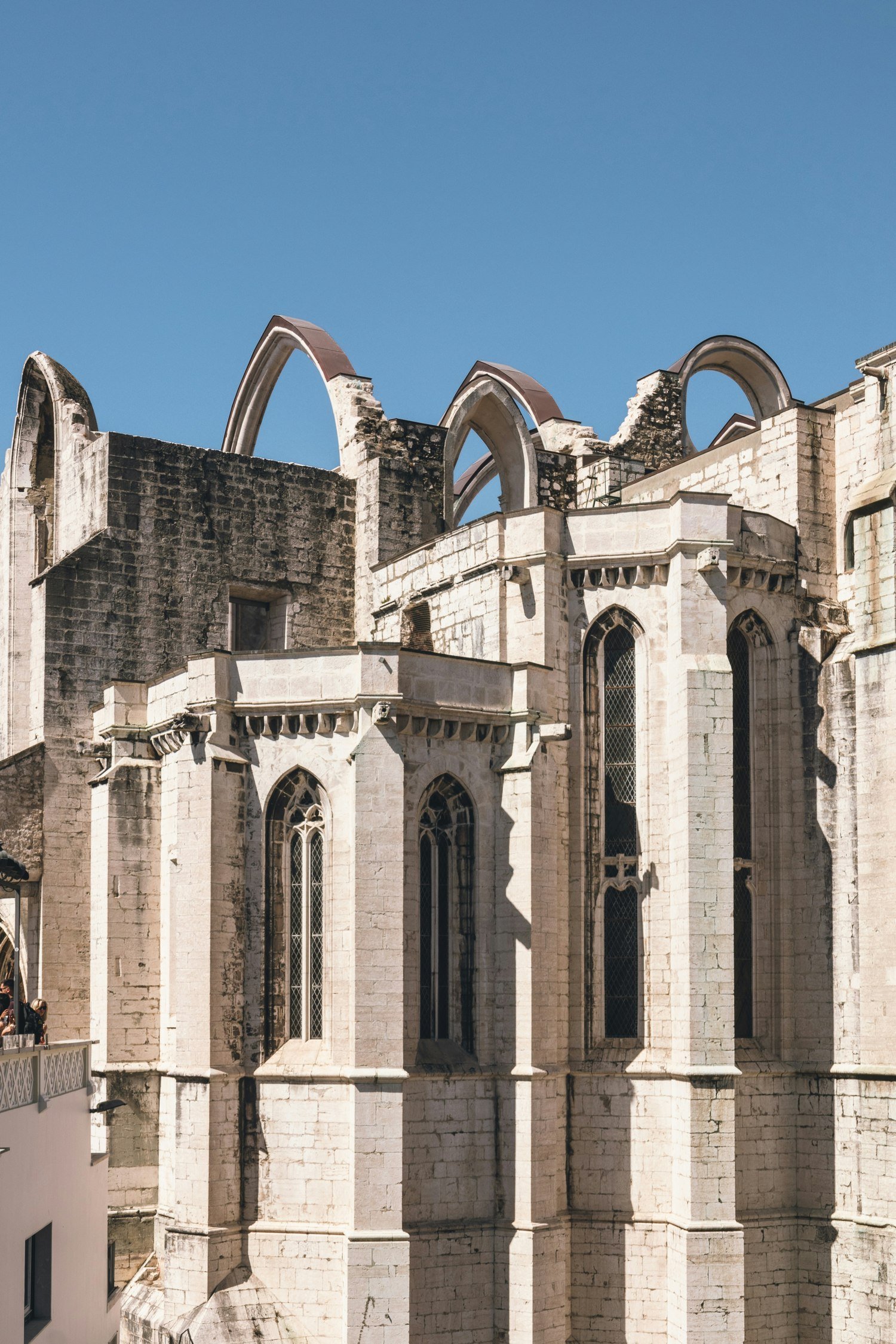
Carmo is often introduced as the church whose roof fell in the 1755 earthquake. That is a useful beginning, but the building has a longer story. Founded in 1389 by Nuno Álvares Pereira, it suffered earthquake damage and fire; work to rebuild it later stopped. The museum’s historical account explains that some of the arches visible today belong to that reconstruction.
Stand back before looking for individual details. Follow the height of the supports, then the gaps where a roof would normally close the space. The changing light gives those empty areas a strong presence. Seeing Carmo this way helps you appreciate a monument shaped by several decisions across time, including the decision to preserve a ruin.
Photo: Aleksandr Zykov from Russia / Wikimedia Commons · Carmo Convent, Lisbon (11976841124) · CC BY-SA 2.0. Resized and recompressed; original framing retained.
Photo: Kristijan Arsov / Unsplash · Gothic architecture ruins stand tall under blue skies · Unsplash License. Resized and recompressed; original framing retained.
Objects beyond the church
Give the archaeological museum its own time
The museum was founded in 1864. Its collections include architectural fragments and funerary monuments alongside archaeology from different periods and places. Roman inscriptions and material from the prehistoric settlement of Vila Nova de São Pedro broaden the visit beyond the church itself. The range makes careful reading of labels especially useful.
Choose a few objects to examine rather than trying to remember every display. Ask where each piece came from, what survives and how its original setting differed from the room you see today. Families can turn this into a simple observation exercise: find an inscription, a carved figure and a reused fragment, then compare the stories each can tell.
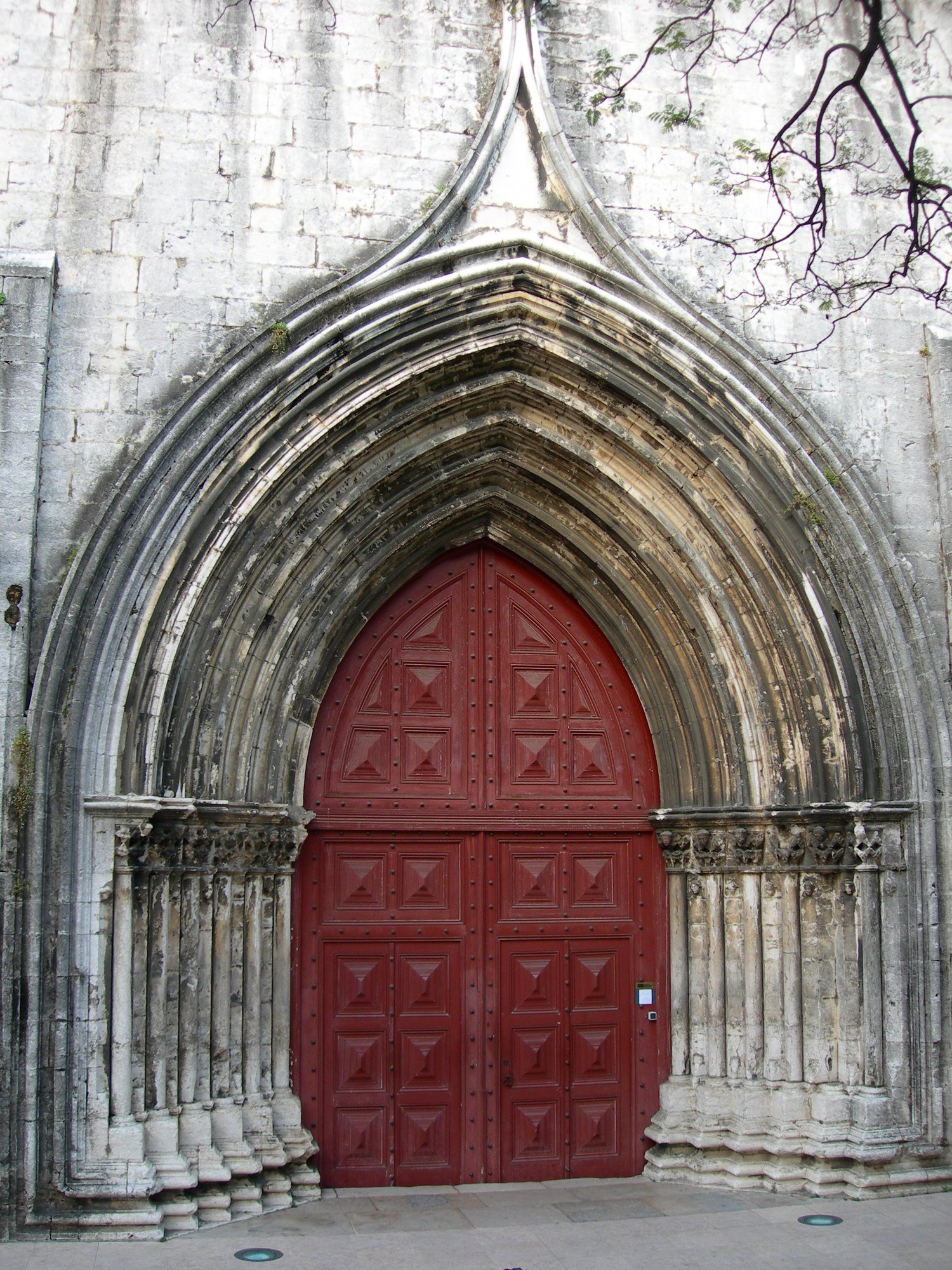
Photo: Maragato1976 / Wikimedia Commons · Convento do Carmo (Lisboa) · CC BY-SA 3.0. Resized and recompressed; original framing retained.
A practical approach from Chiado
Arrive through Largo do Carmo
The entrance is at Largo do Carmo. The official visitor page lists Baixa-Chiado as the nearby metro station. Plan your approach around the hill and your wider day, leaving enough energy for the visit rather than turning the climb into a rushed connection. If you need step-free travel, check the complete journey as well as the museum entrance.
Carmo also fits naturally into a walk through Chiado. Keep a pause in the square and time for the surrounding streets, rather than treating the museum as an isolated stop. Our related Lisbon guide offers more context for planning the city around your interests. Choose the next neighbourhood before setting off so you avoid unnecessary backtracking.
A visit partly under the sky
Prepare for light, weather and visitor rules
The nave is open to the weather, so bring sun protection or an extra layer according to the forecast. A roofless church has a different atmosphere in clear sunlight and under cloud; neither guarantees the photograph you have in mind. Give the building a few minutes before reaching for your camera, and keep walkways clear when you stop.
Check the museum’s current opening days before travelling, especially if your Lisbon stay is short. Its visitor information also sets out photography and luggage rules. Travel light when you can. The museum describes its public areas as wheelchair accessible; confirm any individual requirements with staff and plan the approach through the city separately.
How to fit Carmo into your day
Build a focused visit rather than a checklist
As a planning suggestion, reserve about an hour, extending it if you like reading museum labels or studying architecture. This is a flexible allowance, not an official visit duration. Start with the nave, spend a separate stretch with the collections and take a final look back through the church before leaving.
For a first day in Lisbon, pair Carmo with a manageable walk and a relaxed meal rather than several tightly timed museum entries. Architecture enthusiasts may prefer to compare its surviving forms with the streets around Chiado; families may find a shorter selection of displays more rewarding. Let your interest in the building determine the pace.
Our suggestion
Look twice at the same space
See the nave on arrival, then return to it after the museum. The objects and the history give the arches a richer context, turning a memorable image into a more thoughtful Lisbon visit.
Planning a Walkborder tour
Practical questions about your tour
Most tours operate in normal rain or fog. The route may be adapted for safety, visibility or monument conditions. Cancellation only occurs when operation is unsafe or impractical.
Yes, within the available time, geography, ticket conditions and operational limits. Major changes should be agreed before confirmation.
Explore Lisbon
Discover Lisbon with room for your interests
Pair Carmo with a private introduction to Lisbon’s historic districts. Tell us if the museum is a priority so that timing and admission can be agreed before booking. Monument tickets are not included in the Lisbon tour.