At a glance
Why visit the Ducal Palace of Vila Viçosa?
The palace combines a marble-clad Mannerist façade with the history and collections of the House of Bragança. It is a different site from Vila Viçosa Castle and from the Palace of the Dukes in Guimarães. Choose the actual museum experience you want before arranging the rest of the day.
Choose your focus
Plan a rewarding visit
A palace developed over time
Read the marble façade as architecture
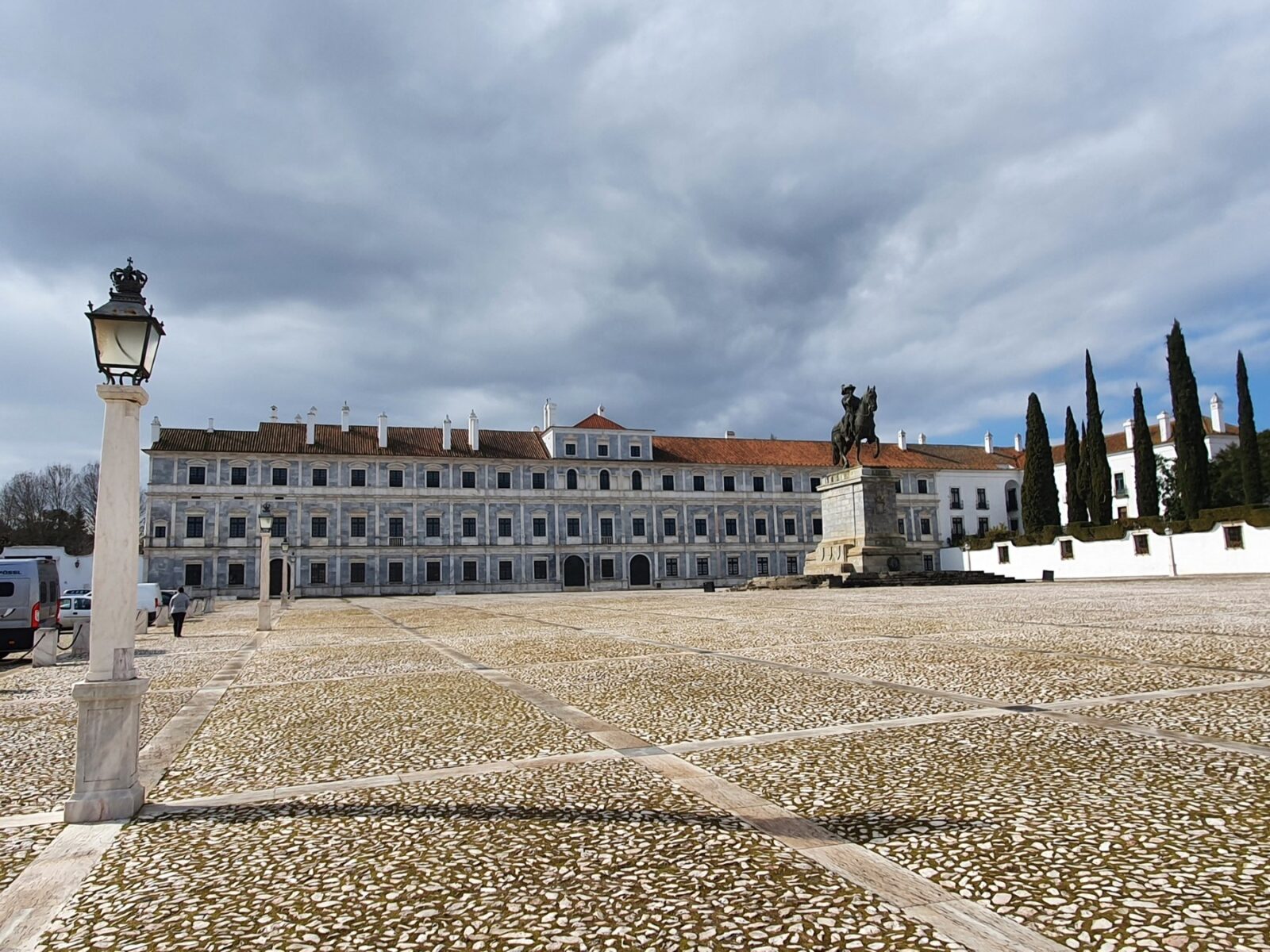
The Ducal Palace is one of Vila Viçosa’s principal monuments, closely associated with the House of Bragança. The municipality dates the start of construction under Duke Jaime to 1501, with important later work in the sixteenth and seventeenth centuries. That history is useful because the building is not one unchanged project: successive work helped create the palace encountered today.
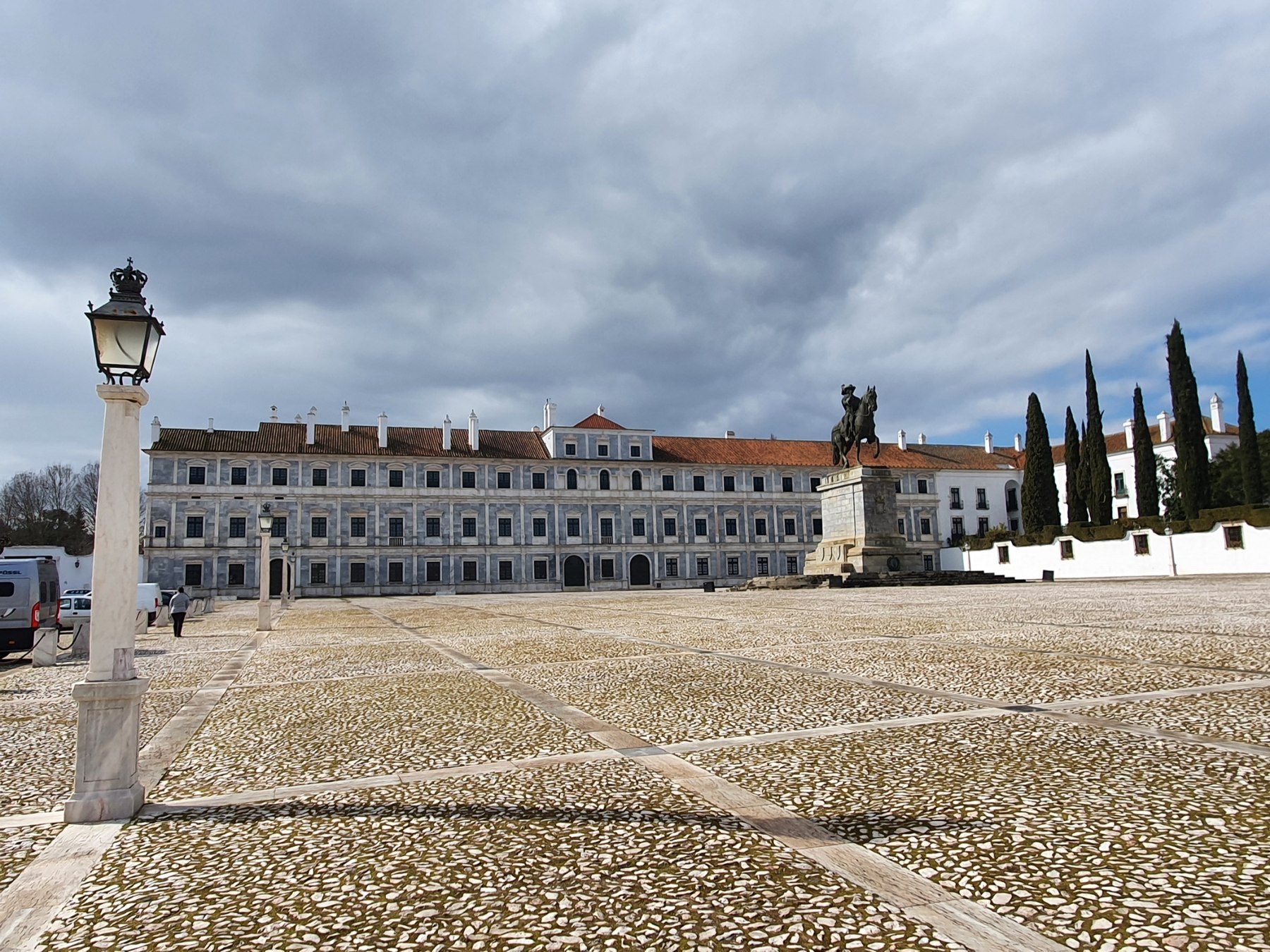
The municipality’s palace introduction identifies the Mannerist façade and its cladding in local marble. Take time to look along the building rather than concentrating on a single doorway. The pattern of openings, the length of the frontage and the use of stone give the exterior its effect. A careful look from public space can be rewarding in its own right, while an interior visit adds a different, separately organised dimension.
Photo: GualdimG · CC BY-SA 4.0. Resized and recompressed; original framing retained.
Material and place
Connect marble with the town around the palace
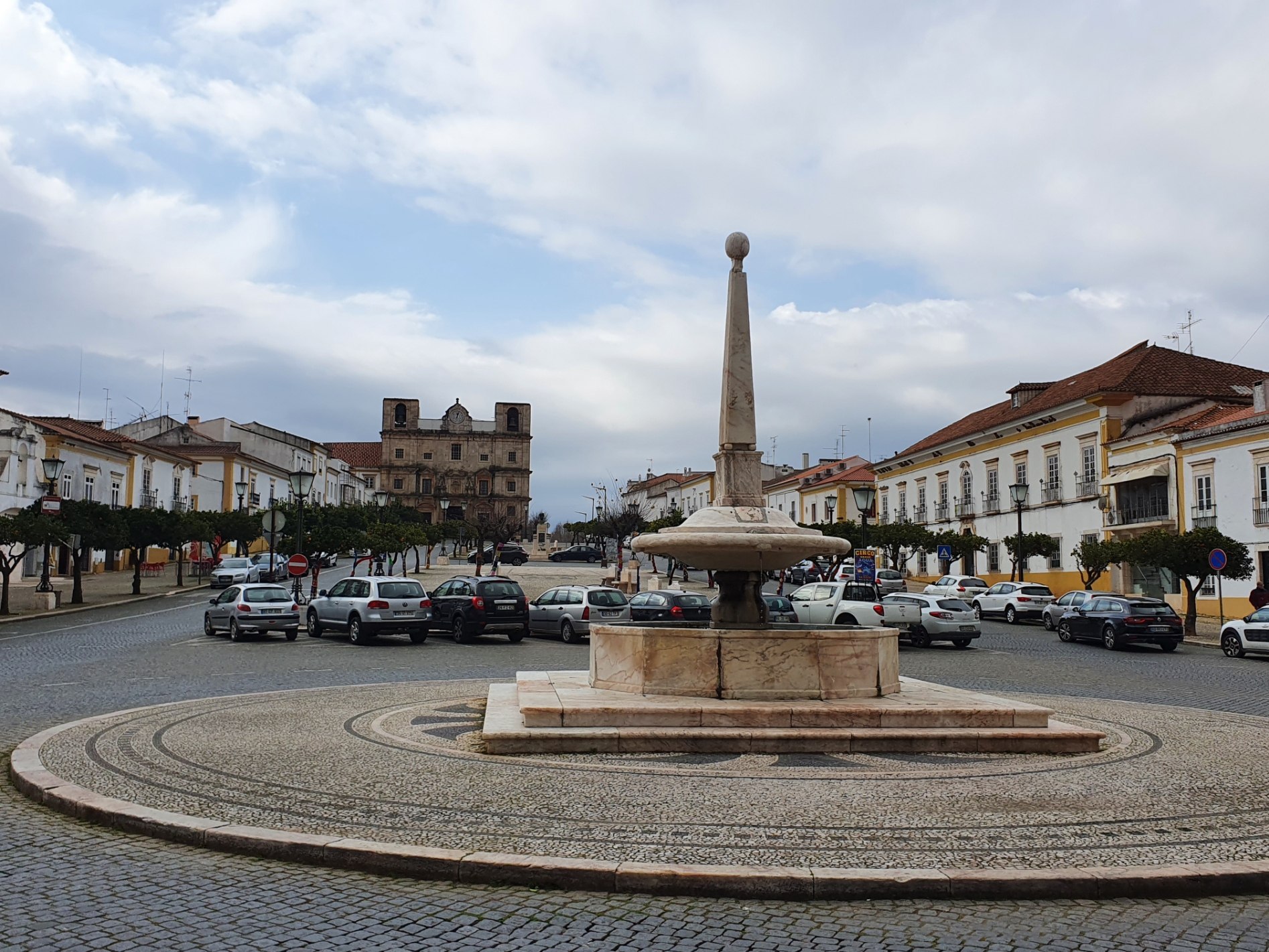
The palace’s marble offers a useful way to look more closely at Vila Viçosa. Notice the stone in the public architecture around you and compare how it works at different scales: a broad façade creates one effect, while a smaller detail invites closer attention. This gives the town visit a thread, with time to appreciate the material as part of the place.
Carry that attention into the streets and squares, looking at how stone gives shape to everyday public space as well as the palace. If you would like to explore marble production, enquire separately about an organised specialist visit. For a palace-focused day, the town’s architecture already offers a meaningful connection between the material, the ducal setting and the surrounding Alentejo.
Photo: GualdimG · CC BY-SA 4.0. Resized and recompressed; original framing retained.
Bragança heritage inside
Choose the collections and guided visit deliberately
The palace collections include painting, sculpture, furnishings, tapestries, ceramics and precious-metal works. These are different reasons for entering, so decide what you most want to understand before arranging the visit. The palace and local castle are separate sites and museum experiences; similar names in a wider Bragança itinerary should not obscure which entrance, collection or visit you are actually booking.
Consult the Fundação da Casa de Bragança’s visitor information. The operator states that museum visits are guided in Portuguese; other language arrangements require direct confirmation, rather than a guaranteed English or Spanish visit on arrival. Groups also need scheduling with the operator. Check the scope of the current visit and any photography or mobility conditions before making the interior essential to your day.
A cultural focus with realistic connections
Give Vila Viçosa its own place in an Alentejo journey
Plan around the palace experience you have confirmed, leaving room to observe the town and the exterior without rushing between unrelated monuments. A route can bring together architecture and collections, but it needs time for the actual guided visit, arrival and departure. Do not let a list of places across the Alentejo remove the attention you wanted to give the palace in the first place.
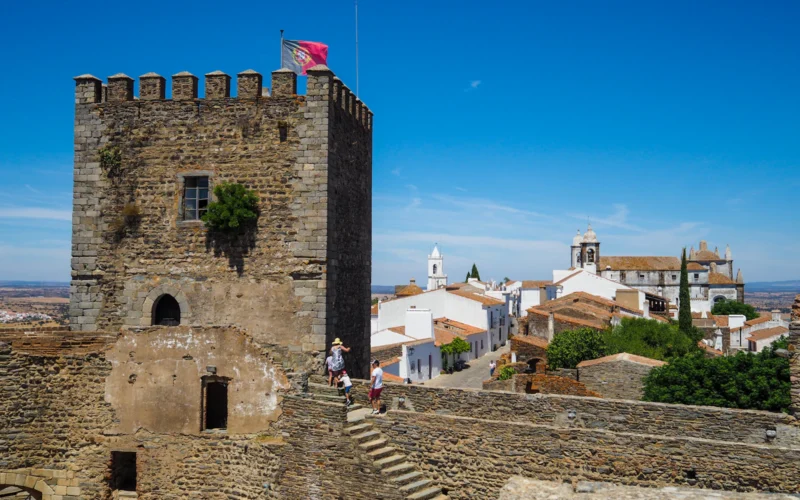
Our Monsaraz travel guide offers a different regional setting for a longer journey, with a town-and-landscape focus to complement a palace visit. Decide which kind of heritage you most want to explore before combining places. Walkborder’s three-day Alentejo itinerary does not include Vila Viçosa, so a palace visit needs a separate agreement.
Our suggestion
Choose an exterior thread and an interior interest
Use the marble façade to understand the building, then select the collection experience that matters to you. A confirmed guided visit with a clear focus is more useful than assuming every room and nearby site will be available.
Planning a Walkborder tour
Weather and itinerary flexibility
Most tours operate in normal rain or fog. The route may be adapted for safety, visibility or monument conditions. Cancellation only occurs when operation is unsafe or impractical.
Yes, within the available time, geography, ticket conditions and operational limits. Major changes should be agreed before confirmation.
Explore the Alentejo
Keep Vila Viçosa distinct from the published three-day route
Walkborder’s three-day Alentejo tour is a related regional journey, but Vila Viçosa is not listed in its programme. Review the actual itinerary and arrange any Ducal Palace request separately, with admission, visit language and additional activities expressly confirmed.