At a glance
What should you look for at Palmela Castle?
Palmela Castle brings together successive defensive layers and the heritage of the Order of Santiago. The Church of Santiago and the ruins of Santa Maria are different parts of the ensemble. Look at how they relate to the fortifications before deciding which interiors or cultural spaces to add.
Choose your focus
Plan a rewarding visit
Defence and archaeology
Read a castle built through successive changes
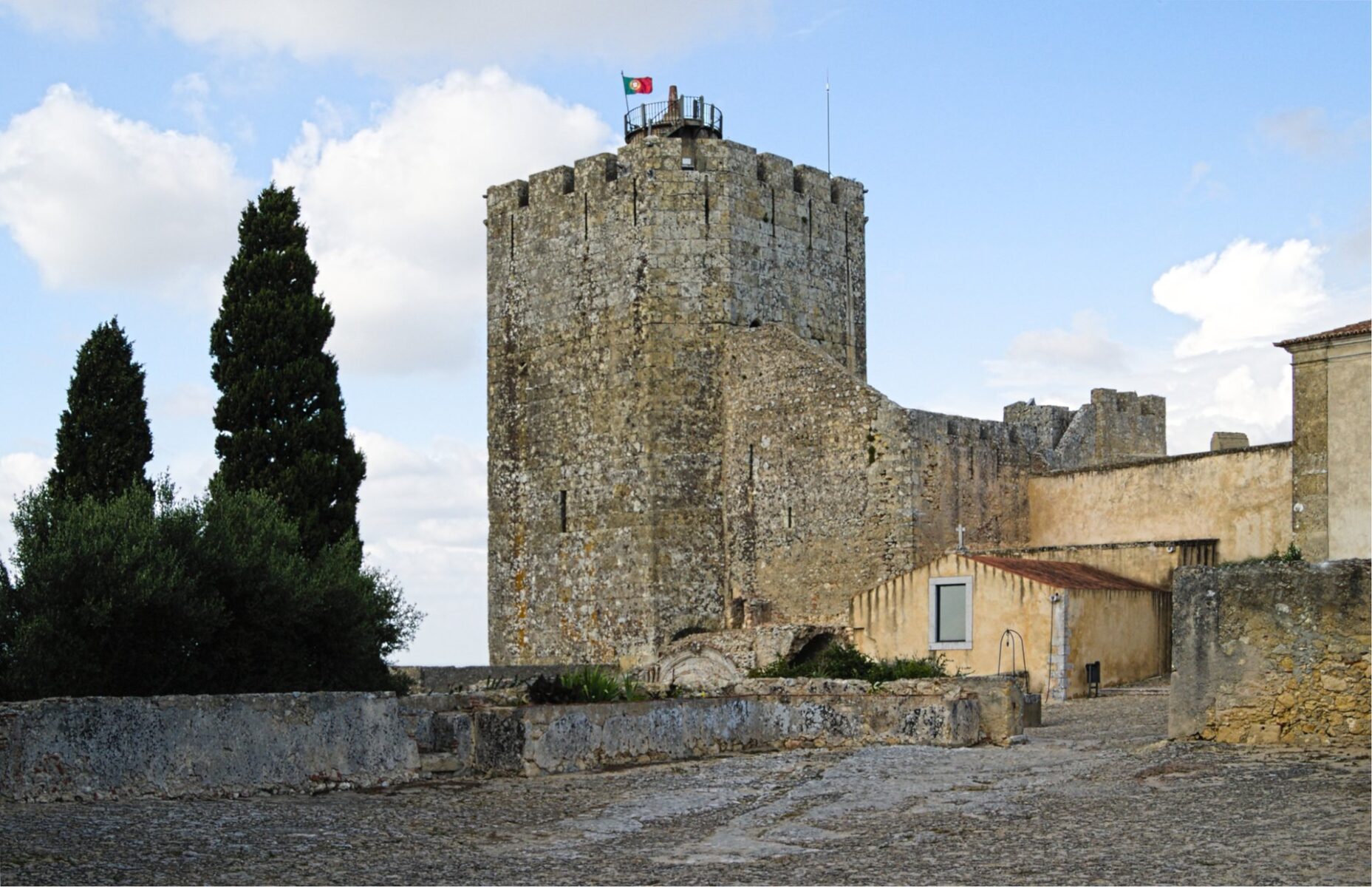
Palmela Castle is most interesting when understood as a developed landscape of buildings and defences. Archaeology documents Islamic occupation and later Christian phases, followed by additions and reconstruction. The result is not one untouched construction campaign. As you move through permitted areas, compare the purpose of the walls with the spaces they protect and the way the ensemble uses its elevated setting.
The municipal museum’s interpretation of the castle helps place these layers in context. It also explains the importance of the Order of Santiago, which established its medieval headquarters at Palmela. That connection gives the site a story beyond military stonework: defence and religious organisation shaped the same place. Choose a few features to examine carefully, using the interpretation available rather than trying to assign an age to every wall yourself.
Photo: Juntas · CC BY-SA 4.0. Resized and recompressed; original framing retained.

Religious heritage within the enclosure
Distinguish Santiago from Santa Maria
The Church of Santiago stands within the original castle enclosure and belongs to the later medieval development of the site. The municipality identifies its construction with the second half of the fifteenth century and its role today as a museum and cultural space. It is a surviving church, not the ruin sometimes confused with it. The ruins elsewhere in the ensemble are those of the Church of Santa Maria.
The official information on the Church of Santiago is the appropriate starting point for a specific visit. Look first at how the building fits the fortified setting, then decide whether the current cultural or museum offering suits your interests. An open enclosure does not automatically mean every church, exhibition, tower or upper level can be visited. Confirm the actual spaces and physical requirements rather than assuming one simple ticket or route covers everything.
Photo: Rui Alves · Unsplash License. Resized and recompressed; original framing retained.

A castle visit and the town around it
Give Palmela a focused place in your journey
Begin by deciding whether your priority is the castle’s history, the religious ensemble or the relationship between the elevated site and Palmela town. A focused visit leaves room to notice architectural details instead of trying to follow every possible extension. Choose footwear suited to historic surfaces, discuss steps and slopes with anyone who needs a gentler route, and leave time for the return journey as well as the outward approach.
Our Setúbal guide to market flavours and city life offers a different nearby interest, but regional proximity alone does not make Palmela part of a published excursion. Walkborder’s Azeitão, Sesimbra and Setúbal tour has its own programme; Palmela Castle is not a listed stop. If this monument is a priority, request a separate agreed arrangement rather than treating it as a guaranteed detour, and keep any church admission or additional activity explicit.
Our suggestion
Use the Order of Santiago as your thread
Follow the relationship between the defences and Santiago’s religious heritage, then identify Santa Maria as a separate ruin. This simple distinction makes the ensemble clearer and gives the visit a coherent story.
Planning a Walkborder tour
Weather and itinerary flexibility
Most tours operate in normal rain or fog. The route may be adapted for safety, visibility or monument conditions. Cancellation only occurs when operation is unsafe or impractical.
Yes, within the available time, geography, ticket conditions and operational limits. Major changes should be agreed before confirmation.
Explore the region south of Lisbon
Keep Palmela as a separately agreed visit
Walkborder’s Azeitão, Sesimbra and Setúbal tour is a relevant regional journey, but Palmela Castle is not a listed stop. Explore its actual programme and discuss a Palmela-focused request separately; neither a detour nor castle or church admission should be assumed.