At a glance
What to know before visiting
Choose Batalha for royal commemoration and the development of Portuguese Gothic and Manueline decoration. Choose Alcobaça for Cistercian architecture, the scale of its church and the tombs of Pedro and Inês. Visit both when heritage is the main focus of the day, rather than an extra between many unrelated stops.
Your main focus
Plan your day
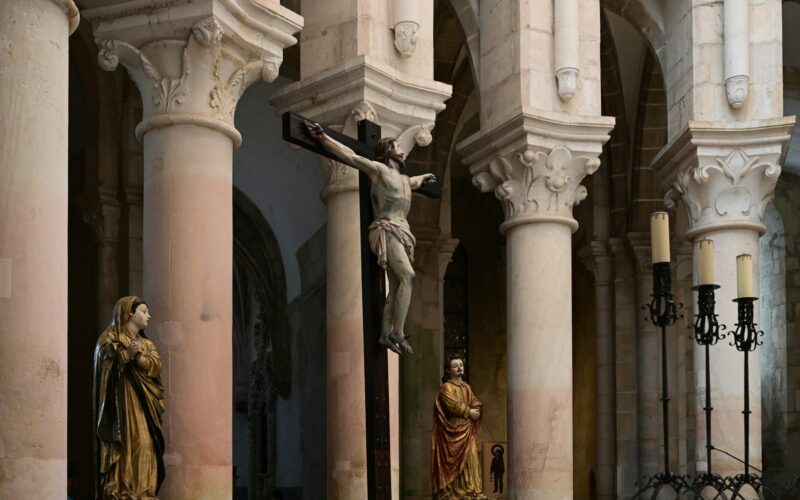
Batalha: a royal story expressed in stone
Batalha grew from the commemoration of the Portuguese victory at Aljubarrota in 1385. Its Dominican monastery connects royal memory with an evolving Gothic vocabulary and Manueline decoration. The UNESCO description of Batalha explains why that architectural development is central to the monument’s significance.
Choose it if carved detail, royal chapels and the relationship between different parts of a monumental ensemble are what draw you to historic buildings. Look at how an opening, a vault or a screen of stone changes the light. Rather than expecting a single uniform church visit, allow the circuit to reveal different architectural ambitions. Check current access to the individual spaces before deciding what your ticket must cover.
Photo: Alvesgaspar · CC BY-SA 4.0. Resized image.
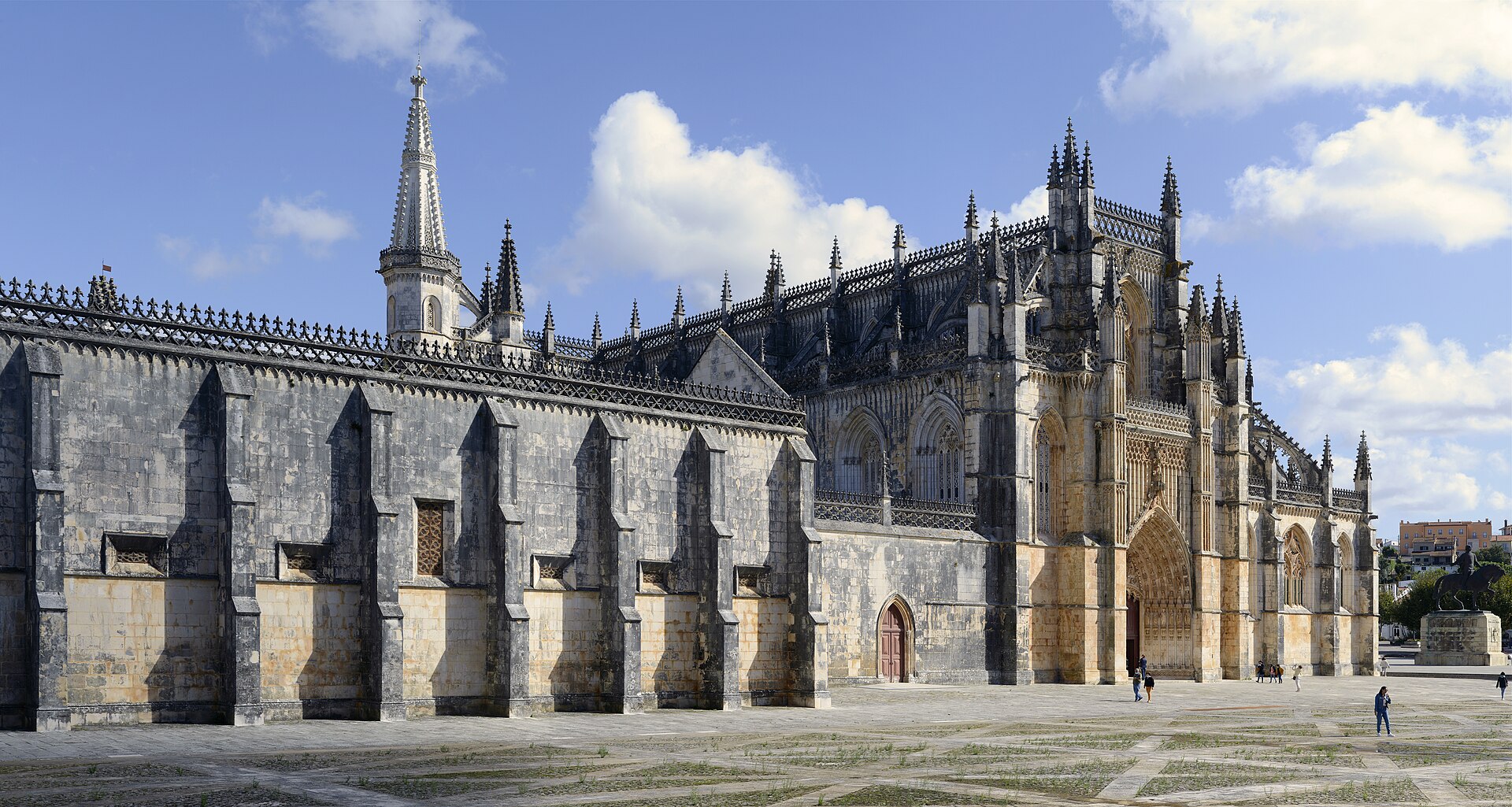
Alcobaça: space, proportion and a closer look at the tombs
Alcobaça offers a different first impression: the Cistercian church places scale and proportion at the centre of the experience. Its long views and repeated stone elements encourage you to read the architecture as a whole before concentrating on individual details. The richly carved tombs of Pedro I and Inês de Castro provide a striking contrast to that restraint.
Choose Alcobaça if you enjoy comparing a vast interior with intricate sculpture, or understanding how monastic spaces supported a community’s daily routines. Our Alcobaça Monastery guide looks more closely at the church, the tombs and the wider visit. Separate what can be seen in the church from the rooms included in the current visitor circuit; neither a photograph of the nave nor a familiar love story represents the whole monastery.
Photo: Alvesgaspar · CC BY-SA 4.0. Resized image.
Visit one well, or give both a heritage-focused day
If your wider day also includes a pilgrimage visit, a coastal town or a medieval village, one monastery may be the more satisfying choice. Decide which architectural experience matters most and protect the time to enjoy it. Combining both is more compelling when comparing their different traditions is the purpose of the journey, with room for travel, admission, a meal and walking at your own pace.
Before booking, compare the current visitor circuits and accessibility guidance at both monuments. Do not assume that a tour naming Batalha also visits Alcobaça, or that church access includes every cloister and room. A focused plan can include fewer places and still provide a richer understanding of central Portugal: the point is to make the contrast visible rather than collect two names.
Our suggestion
Make room for the experience
Choose by the experience you want: Batalha’s royal and decorative layers, or Alcobaça’s monastic spaces and sculpture. If visiting both, make that comparison the day’s main theme.
Planning a separate Walkborder tour
Weather and itinerary flexibility
Most tours operate in normal rain or fog. The route may be adapted for safety, visibility or monument conditions. Cancellation only occurs when operation is unsafe or impractical.
Yes, within the available time, geography, ticket conditions and operational limits. Major changes should be agreed before confirmation.
A relevant Walkborder route
Explore the wider journey
Walkborder’s Fátima, Batalha, Nazaré and Óbidos tour includes Batalha in its published route. Alcobaça is not listed in that itinerary. Explore the programme if that combination suits you; any separate Alcobaça visit, admission or route change needs advance agreement rather than being assumed included. At Batalha, the published tour describes ticketed areas as an optional visit, subject to opening hours and the day’s schedule; admission is paid separately.