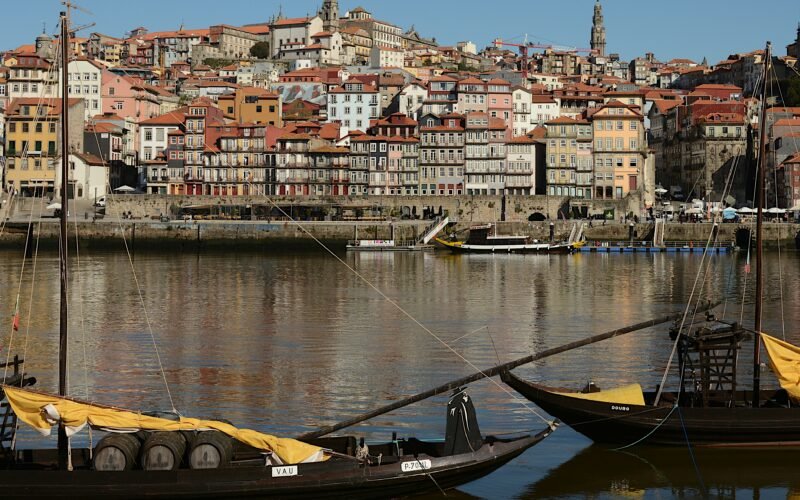
At a glance
What to know before visiting
São Bento is both a railway station and a place to look closely at Portuguese tile art. Focus on the entrance hall, leave passenger routes clear and compare the large historical scenes with the smaller decorative sequences.
Your main focus
Plan your day
A tiled hall with more than one story to tell
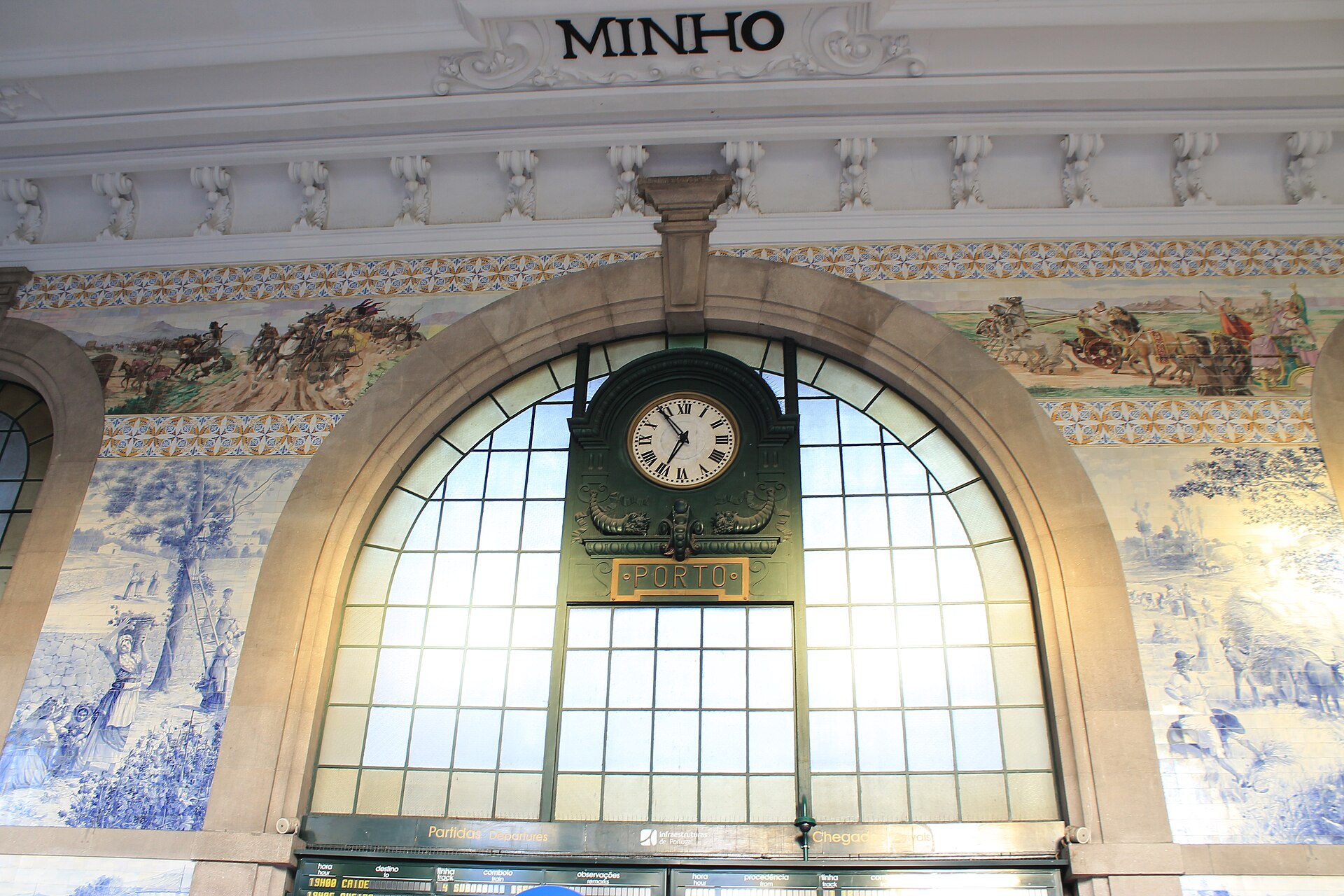
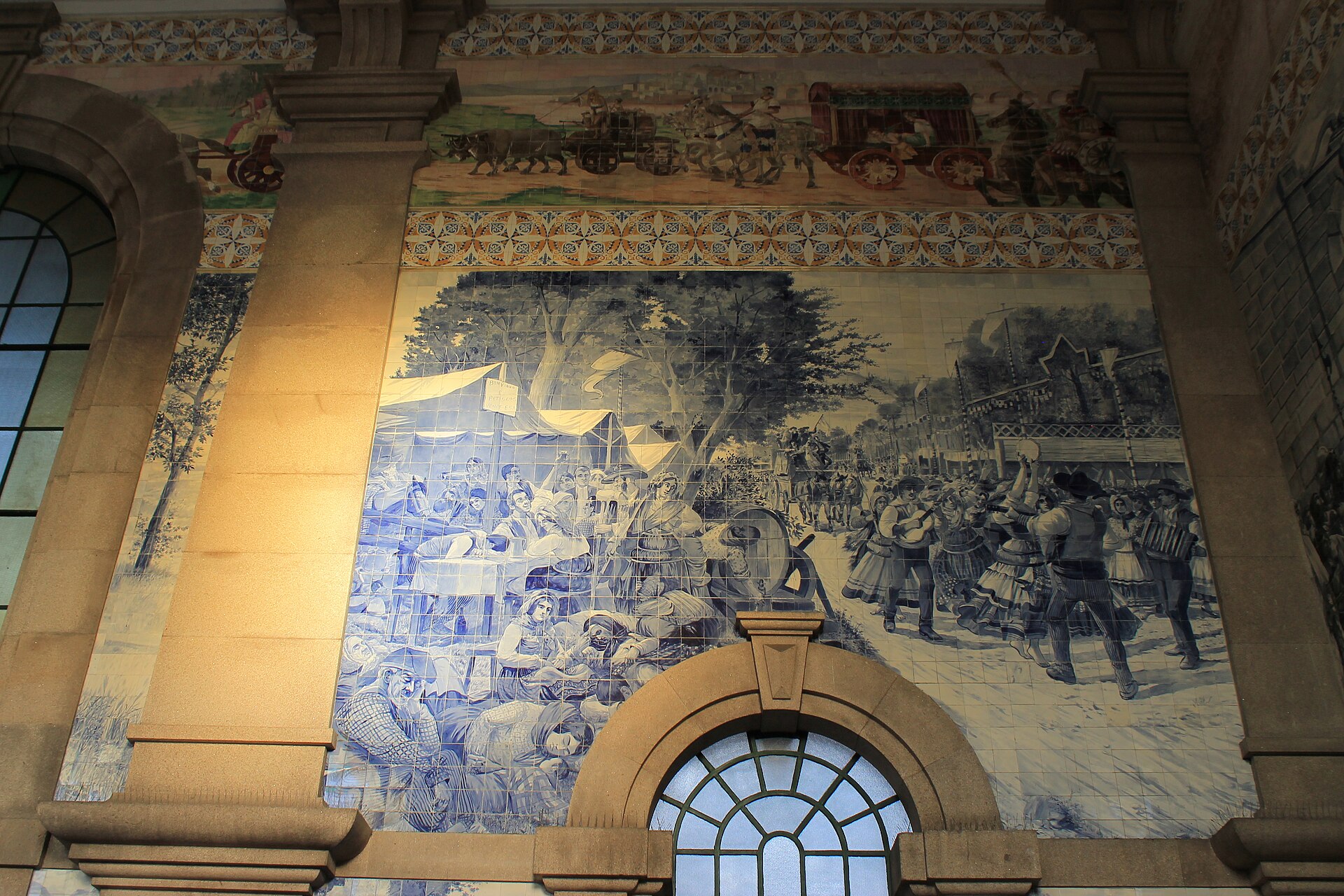
Step into the hall and take in the walls before choosing a single panel. Jorge Colaço’s azulejos turn the station entrance into a narrative setting: historical episodes, transport and scenes of Portuguese life appear across the tiled surfaces. The official Visit Porto description of São Bento identifies the artist and the subjects represented.
The scale matters as much as individual details. A photograph may flatten several scenes into one blue-and-white pattern; looking from different positions makes the divisions clearer. Start with a broad view, then return to one scene and follow the figures, gestures and setting. This is a rewarding stop even if you do not recognise every person or event depicted.
Photo: John Samuel · CC BY-SA 4.0. Resized image.
Look slowly without interrupting a working station
The hall has a practical purpose as well as an artistic one. People arrive with luggage, look for information and move towards their trains. Choose a place to pause that leaves doors and walking lines clear; step aside before studying a panel or checking your photographs. If the hall is busy, wait for a suitable gap rather than expecting passengers to make room for a shot.
Keep your visit within areas open to the public and follow station instructions. The tiled entrance hall is the focus of a sightseeing stop; travelling by train or entering controlled railway areas is a separate matter. With children, turn the visit into a simple looking exercise — find a vehicle, a horse or a change of colour — while keeping them close in the flow of passengers.
Photo: John Samuel · CC BY-SA 4.0. Resized image.
Make São Bento part of a comfortable historic-centre walk
São Bento sits within Porto’s central sightseeing area, with the Cathedral quarter and the streets towards Ribeira offering a natural continuation. They are not a flat museum corridor: slopes, steps and uneven paving can shape how much you want to combine. Plan around walking comfort and keep time for a proper pause instead of treating every nearby landmark as compulsory.
Our Porto in one day guide places the station within a wider route through the historic city and riverfront. If you also want a ticketed interior, a cellar visit or a cruise, make that a separate planning choice. São Bento works particularly well as a focused encounter with the city’s tilework, with the rest of Porto providing the context outside.
Our suggestion
Make room for the experience
Choose one large scene and one smaller decorative sequence. Looking at those carefully will tell you more than taking a photograph of every wall.
Planning a separate Walkborder tour
Weather and itinerary flexibility
Most tours operate in normal rain or fog. The route may be adapted for safety, visibility or monument conditions. Cancellation only occurs when operation is unsafe or impractical.
Yes, within the available time, geography, ticket conditions and operational limits. Major changes should be agreed before confirmation.
A relevant Walkborder route
Explore the wider journey
Walkborder’s private Porto city tour includes a São Bento stop in its published programme, alongside the Cathedral area, Ribeira and Gaia. Explore the route for a wider city day. Optional paid interiors, cellar visits and cruises need advance agreement and are charged separately unless included in your written proposal.