At a glance
Why visit Alcobaça Monastery?
The Monastery of Santa Maria de Alcobaça brings together the restrained scale of Cistercian Gothic architecture and exceptionally detailed royal funerary sculpture. It is a visit about space, craftsmanship and monastic life.
What makes it special
Plan your visit
Cistercian architecture
A Gothic church built around light and proportion
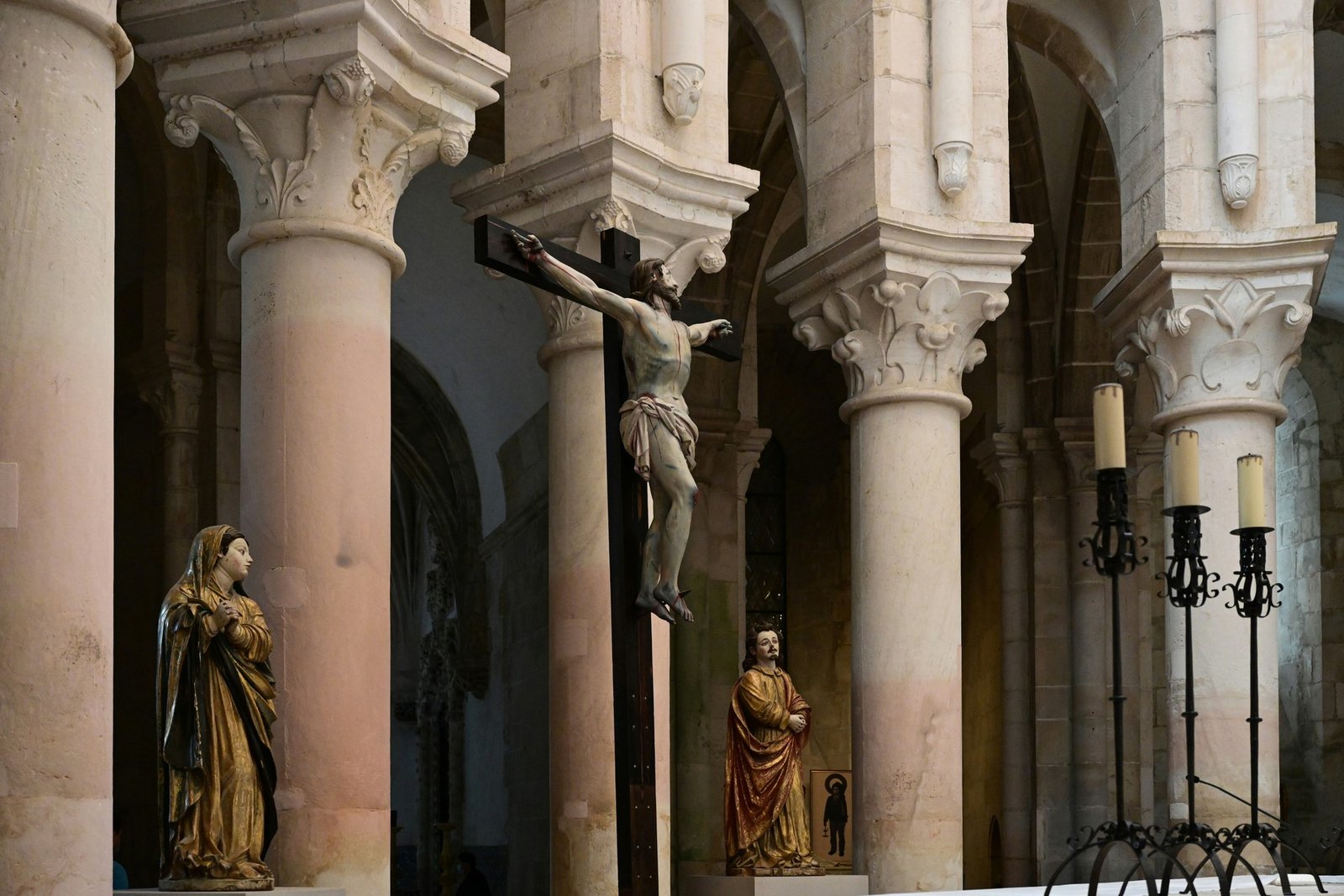
Alcobaça Monastery stands in the town of Alcobaça, in central Portugal. Its church makes an immediate impression through height, repeated columns and the long view towards the east end. Instead of looking for decoration everywhere, follow the rhythm of the stonework and notice how light changes the character of the interior. The restrained design gives the few more elaborate elements particular force.
The monastery was founded in the 12th century and developed under the Cistercian Order. UNESCO’s World Heritage account of Alcobaça highlights its scale, architectural clarity and importance to medieval religious life. The wider ensemble evolved over successive centuries; the exterior and domestic spaces therefore tell a longer story than the church’s Gothic interior alone. Start outside, then enter with time to appreciate that change in atmosphere.

History in carved stone
Pedro and Inês: looking closely at the royal tombs
The tombs of Pedro I and Inês de Castro bring a more intimate focus to the immense church. Their connection is central to Portuguese cultural memory, but the works are rewarding beyond the famous love story. Circle them slowly where visitor access allows: the reclining figures, supporting creatures and carved narrative scenes invite a closer look than a single frontal photograph can provide.
Distinguish the documented people and monuments from later romantic retellings. Rather than repeating every dramatic legend as fact, use the sculpture itself to guide your attention. Compare the dense carved surfaces of the tombs with the architectural restraint around them. That contrast is one of the strongest reasons to make Alcobaça a deliberate heritage visit, even if you already know other Portuguese monasteries.

Planning the experience
Monastic rooms and a visit with a clear focus
The interest continues beyond the church into spaces associated with the community’s daily life. Where the current visitor circuit includes them, the cloister, refectory and kitchen help explain how the monastery functioned as a place of work, meals and shared routines. Look at the scale and purpose of each room instead of expecting every space to resemble a chapel. Access to individual areas can change with conservation or operations.
Consult the official tourism introduction to Alcobaça Monastery and the monument’s current visitor notices before travelling. If you are comparing nearby heritage towns, our guide to exploring Óbidos at your own pace offers a useful contrast: intimate streets and walls rather than a single monumental ensemble. Choose combinations that leave room to enjoy each place, with admission and walking needs agreed separately.
Our suggestion
Give the church and tombs separate attention
First take in the nave as a whole, then return to the tombs for their carved detail. This simple change of pace makes the visit richer without adding more stops.
Questions about your private tour
Tickets and walking requirements
It depends on the selected tour. Each product page states exactly what is included, and the final confirmation lists any timed tickets.
The route can be adapted, but most major monuments include slopes, steps or uneven surfaces. Share mobility needs before confirmation.
Explore Portugal’s heritage
Include Alcobaça in a broader journey
Walkborder’s nine-day Portugal tour lists Alcobaça within its wider national itinerary. Explore the route and confirm monument access, admissions and the final programme in your own proposal.